


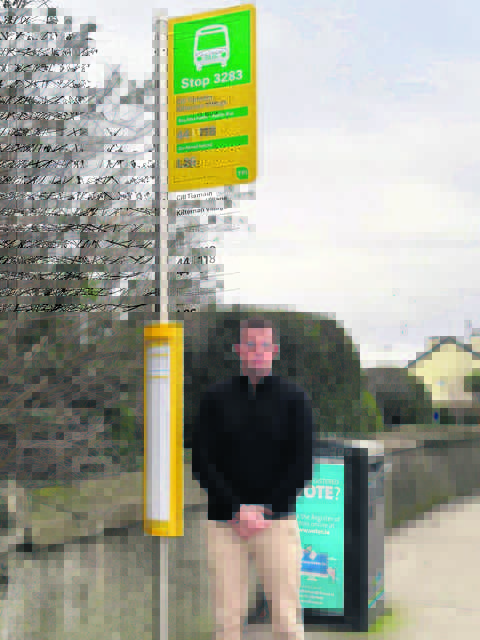
Questions have been raised over the handling of bus diversions linked to the closure of Enniskerry Road after passengers reported being left stranded at bus stops and asked to leave services they believed would continue operating.
Glencullen-Sandyford councillor Pierce Dargan has written to the National Transport Authority (NTA), Dublin Bus, Go-Ahead Ireland and Transport Minister Darragh O’Brien seeking an explanation for what he says were major discrepancies between diversion plans communicated in advance and those implemented on the ground.
The closure affected routes 44, 118 and L26, with residents reporting widespread confusion once the revised arrangements came into effect.
According to the Fine Gael councillor, other councillors were briefed on changes to affected services before the road closure and shared that information with local residents.
However, many passengers subsequently discovered that buses were operating differently from what had been communicated.
Residents reported waiting at bus stops that were no longer being served, while others were asked to leave buses despite having been advised that services would continue along certain routes.
The disruption caused inconvenience for commuters, students, older people and those attending healthcare appointments.
“Residents were entitled to expect that the information issued by transport authorities would be accurate,” Dargan said.
“Councillors shared that information in good faith, only for many passengers to discover that the reality on the ground was completely different. This created unnecessary confusion and frustration for people who depend on public transport every day.”
While acknowledging that responsibility for the day-to-day operation of services rests with the NTA and bus operators, Dargan said the incident raises broader questions about accountability and communication.
“When information provided to elected representatives and the public proves to be inaccurate, it undermines confidence in our public transport system and makes it more difficult for councillors to assist residents,” he said.
“There must be clear accountability when communication failures of this scale occur.”
In his correspondence, Dargan has requested clarification on why information provided in advance differed from the arrangements ultimately implemented on the affected routes.
He has also sought details on the oversight measures used to verify service information before it is communicated to the public and what lessons have been learned from the disruption.
The councillor is seeking assurances that improved procedures will be introduced to ensure accurate, timely and consistent communication during future road closures and service diversions.
“Residents deserve clear and reliable information when major changes to public transport services are being introduced,” he said.
“A full review of what happened is needed so that similar problems can be avoided in the future.”