


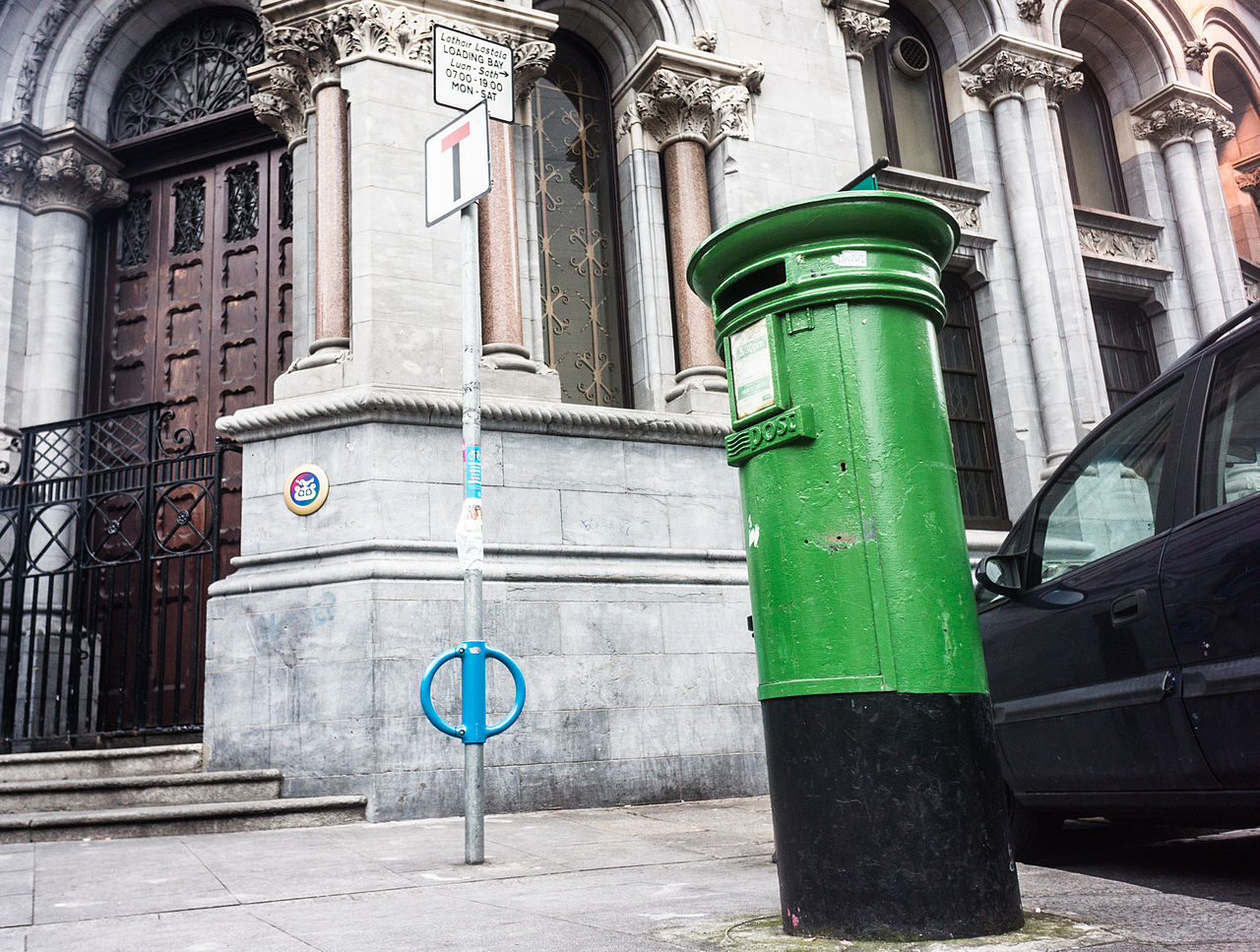
Fine Gael TDs Maeve O’Connell and Barry Ward have criticised their government colleagues for allowing post offices on the Southside to be threatened with closures.
Last week, the Dáil debated the current state of post offices across Ireland, and while TDs from rural constituencies dominated the debate, Dublin’s Southside TDs said that the threatened closures of post offices were also an urban problem.
Minister for Communications Patrick O’Donovan told the Dáil that there are 873 post offices across Ireland, with “most of them” operated by independent postmasters.
Minister O’Donovan noted that only 41 of post offices are directly operated by An Post, with postmasters operating over 90% of the network.
“This is a nationwide network of significant scale, providing the economic and social benefits I have mentioned, to citizens urban and rural across all of Ireland,” he said.
He said that the government recognises the challenges for both the network and postal services, and that “uncertainty” regarding global trade is one of these challenges.
“As this network facilitates trade, I am aware that postmasters are likely to be feeling the effects of this uncertainty.”
O’Donovan’s party colleagues, O’Connell and Ward, said that the threats of post office closures aren’t just limited to rural communities.
O’Connell, TD for Dublin Rathdown, cited an example in the Stilorgan area when a local postmaster left the area.
Per O’Connell, the postmaster in Mount Merrion announced he was moving on, An Post advertised the vacant role, but there was no interest in the role.
“We were lucky in the community to have two other local post offices a 25- or 30-minute walk away, but ast month, one of those closed,” she explained.
“It was the same story; the postmaster moved on, it was advertised but nobody took on the role. We are still quite lucky as we have one local post office, this one is in Stillorgan village.”
The Fine Gael TD noted that the village introduced paid parking before Christmas for the first time and from the first hour.
“One local said to me that has effectively increased the cost of your first stamp by 25% year on year. We know that is not how pricing works but it shows how people look at pricing. They looked at this as having increased the price of a cup of coffee or litre of milk if they drive to Stillorgan village. People have started to avoid it and trade is down by up to 40% by some measures.”
She said she was concerned that the local post office could be lost.
“My concern is whether that will end up affecting the post office. Could we end up losing that post office? Is it economically viable? After that, we do not have a local post office serving a community of over 10,000 people. The nearest are a 40-minute or 60-minute walk, which is not realistic for most people. We are looking at people driving out of the community to avail of a basic service.”
O’Connell noted, “we seem to have government policies that are at odds. One policy is encouraging people, particularly in urban areas, to live, work, socialise and avail of services in the local community, while another arm of the government is removing the very services we need to keep us in our local communities. I ask the Minister of State and An Post what we are doing to maintain our urban postal networks, so we can continue to work, live and socialise in local communities.
Dún Laoghaire TD Barry Ward said that post offices are a “community lifeline,” and said that any post office closure affects every community, be they rural or urban.
“We can all agree that the closure of a post office is a bad thing. I understand the need for consolidation and the business case for reducing the number of post offices because of the costs associated with each one but we have to recognise that each post office is more than just a monetary unit within An Post’s business model. It is a community lifeline, it is a facility for the local community and it is a rallying point for people in that community; the loss of it is a loss for that community,” he said.
The Dún Laoghaire TD noted, “people very often associate the closure of post offices as a rural feature, and obviously it does have a particular impact in rural communities where there is less of a population. However, in urban areas like Booterstown, for example, the Woodbine post office is closed. The post office has closed in Dalkey. They closed because the postmasters in question retired and there was nobody to replace them.”
He explained, “it was not because the post office was unviable, or because it was not busy enough or there was no demand for it. It was because there was no person who was willing to take over that postmaster’s role.”
He questioned how that situation was allowed to take hold and said “it is an important question we need to ask.”
The Fine Gael TD said that the terms and conditions for postmasters are “singularly unattractive” and that there are “real problems” with An Post’s approach to remuneration and terms and conditions for postmasters.
“An example is the pension dispute that is going on; I am aware the government has signed off on the 7% increase for An Post pensioners but they want their pension to be brought into parity with current postmaster pay.”
“When TDs retire, their pension will be a function of the current pay of TDs but when postmasters retire, that is not what happens – there is an issue around parity there.”
He questioned, “how can you ask somebody to take up a postmaster position when the terms and conditions they are asked to operate under are not attractive enough for them to take it on? That is a major factor.”
Further up the Southside, independent TD Paul Gogarty said “we have to look at it as a community service model going back to the days when there was a same-day postal service across the country when we did not have motorised vehicles.”
“With the wider issue of social cohesion in towns and villages across the country, especially in rural areas, we need to rethink the post office. Whether it is linking up with credit unions or community shops, the post office should be seen as the heart of the community.”
“No matter what level of service or what proportion is mail, there should be a post office in every town and village even if some of them are operating on a part-time basis,” the Dublin Mid-West TD said.
Local Social Democrats TD Eoin Hayes said post office closures are “emblematic of the broader decay of local communities.”
“As one constituent wrote to me last week, the closure of the Rathmines post office represents a gradual erosion of a vital public service in Rathmines and the surrounding area, it’s more than a counter – it is a civic space relied upon by older residents, local businesses, and the wider community”.
“It is of the utmost importance that the government look holistically at the question of community investment and development, particularly in Dublin’s urban villages, and how post offices provided by the state will continue to be a vital part of those communities,” the Dublin Bay South TD said.