


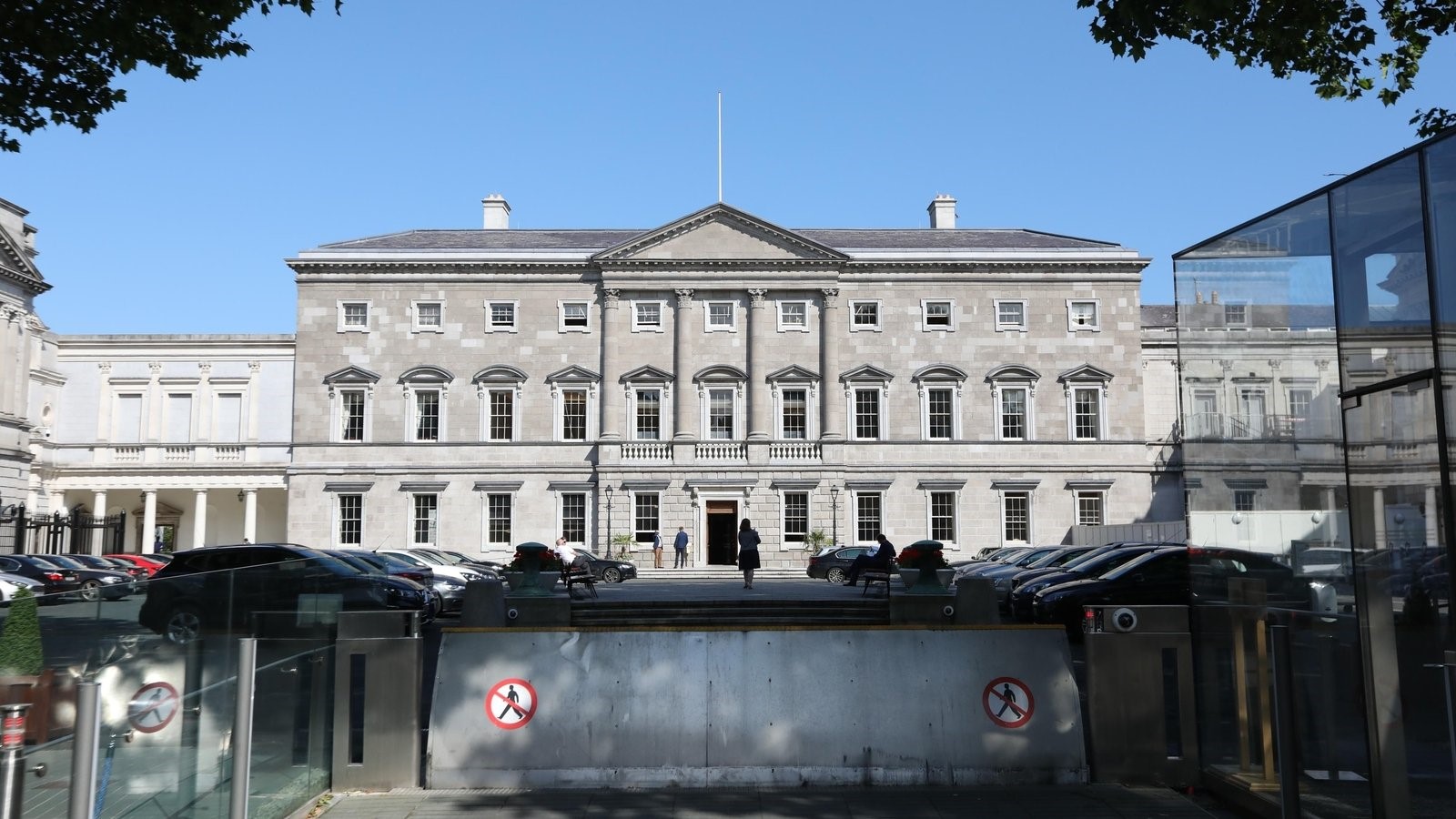
Local TDs have shown a wide range of opinions on the immigration issue.
In September, Minister for Justice and Fianna Fáil TD Jim O’Callaghan announced sweeping changes to Ireland’s immigration laws.
The Dublin Bay South TD announced changes to Ireland’s immigration laws, chief among them raising the amount of time an immigrant needs to spend in Ireland before becoming eligible for citizenship.
Under the new legislation, it will now take someone eight years to become an Irish citizen instead of five.
Minister O’Callaghan’s justification was that Ireland was an outlier compared to the rest of Europe on immigration laws, and he said that eight years is the same amount of time immigrants to Germany need to wait before attaining citizenship.
Minister O’Callaghan asserted that the proposed reforms are “balanced, proportionate and necessary.”
“The measures concern the requirements for naturalisation and should not be interpreted as a judgment on the contribution of migrants. They seek to ensure that citizenship reflects a demonstrated, durable connection to Ireland, knowledge of the state and its institutions, and a sustained commitment to participation in Irish society.”
Minister O’Callaghan’s argument was backed up by junior minister Colm Brophy, who claimed that citizenship is a “privilege, not a right.”
Brophy, who serves as minister for integration (curiously, a junior minister role when it was a Cabinet role in the last government), sang the praises of the EU Migration Pact this week, widely regarded as the most right-wing piece of legislation that the European Parliament has ever produced.
The Dublin South-West TD said this week “while it is still early, the experience to date in Ireland demonstrates that the Pact is delivering a more efficient and effective asylum system.”
Dublin North-West TD Paul McAuliffe said that the proposals were “common-sense.”
He quipped, “I encourage the opposition to consider them at face value rather than ascribing a motivation to them.”
The Fianna Fáil TD noted, “in my community, I see those who came here to work, study and build a life. They are involved in our sports clubs, staff our hospitals and run our local businesses; they are our neighbours and friends.”
“It is a proud day for both them and Ireland when they cross that threshold and become citizens of a republic. You can see it on their faces in the photographs and the video footage. It is because that moment matters so much that we should protect it.”
McAuliffe insisted that nothing about the legislation is “unusual,” repeating the Minister O’Callaghan line that it was simply bringing Ireland into line with the rest of Europe.
“Austria, Italy, Spain and Switzerland all set residency periods in a similar way. Most EU countries require language proficiency. Civics tests are common across the Union. Economic self-sufficiency is a standard pillar of citizenship policy from Germany to Denmark to Poland. These changes bring Ireland into line with our European partners,” he explained.
During the same debate, Fine Gael TD Barry Ward questioned this logic.
“In my opinion, we do not need to increase the wait to eight years. It does not bring us in line with Europe. 13 of the 27 EU countries have a requirement of five years or fewer for citizenship,” the Dún Laoghaire TD said.
From the opposition benches there was a subtle, but profound, difference of opinion on the issue.
Sinn Féin TD Paul Donnelly said that his party wants a “strong, fair and efficient migration system that serves the interests of the people of this state as well as those fleeing war and persecution.”
Donnelly said, “I have lived in Dublin West for the past 30 years and I have seen it grow into one of the most diverse communities in this state and it is our strength.”
“However, we must move towards the management of our migration system on an all-Ireland basis. This makes absolute common sense and would have huge benefits in the long term. Migration is another incredibly important reason for having a border poll as soon as possible. The British state should not have control of any part of our borders,” he said.
Donnelly asked, “how can we be encouraging people to come here to work and study if housing is not available to them or it costs up to 60% or 70% of their wages?”
Donnelly’s party colleague and spokesperson on immigration, Matt Carthy, was less subtle in how his party sees immigration.
Sinn Féin immigration spokesperson Matt Carthy said that “emphasis has to be put on integration, civic participation, community involvement and an understanding of Irish society, including an ability in Irish, English or Irish Sign Language.”
Carthy claimed that the existing immigration policy has “created chaos, increased tensions and undermined social cohesion in a way that was entirely avoidable.”
Sinn Féin has to walk a tight line between appealing to socially conservative working-class voters and socially progressive metropolitan voters if it wants to lead the next government; comments of that ilk by Cathy represent the dilemma facing the party.
Carthy stated, “the days of misrepresenting Sinn Féin are over; we will not allow any west Brit self-declared patriots to misrepresent us ever again.”
Solidarity TD Ruth Coppinger said, “we need to say that it is unnecessary, divisive and damaging.”
“There has never been any demand in this Dáil or anywhere else for a discussion about citizenship. In fact, all I have heard about is IPAS centres and ‘illegals’,” she noted
Coppinger remarked, “suddenly, we have a problem with citizenship. The government is failing on housing and the cost of living and suddenly, this is brought into the equation as the Dáil starts its term.”
She said that the immigration issue is a distraction.
“It is taking the focus of the data centres eating our electricity or the fact that seven out of ten young people feel they are going to have to leave this country. It is performative cruelty,” she said.
The Solidarity TD questioned the necessity of a language test.
“I do not speak Irish. Are we going to make migrants perform to a higher level than is the case for other people? This is not needed and all the government is doing here is making life miserable and creating guest workers in this country rather than people who have a stake in society,” she said.
Green TD and leader Roderic O’Gorman, who served as Minister for Integration in the last government, had choice words for his former Cabinet colleagues.
“To me it seems the government is being performatively tough on migration of any kind to match what it perceives to be a shift in sentiment. That is the opposite of the leadership we need right now,” he said.
O’Gorman criticised the upheaval the legislation causes for immigrants who are already living in Ireland and were close to receiving citizenship on the assumption it would be granted after five years.
“I am particularly concerned about people who already have applications in process. Those who have submitted applications did so based on the rules that existed at the time. Existing applications should be submitted under the current system and the new requirements should not be applied retrospectively,” he said.