


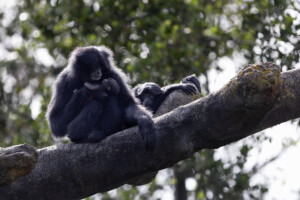
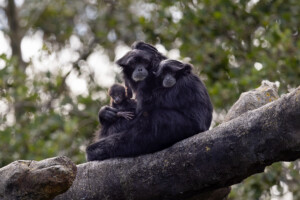
There is a new baby in the siamang gibbon enclosure at Dublin Zoo, and keepers have already seen it feeding from its mother, Cahaya.
Born on Sunday, August 30, the infant joins Cahaya, father Luca and two-year-old brother Sanuk.
The zoo’s animal care team has not yet confirmed whether the baby is male or female, but says it has been observed suckling healthily and is settling in with the family.
Cahaya, 16, arrived at Dublin Zoo in 2014. Luca, 25, joined her in 2018, and the pair welcomed Sanuk on December 2, 2023.
Keepers say the two gibbons have a strong bond and have proved attentive parents, both to Sanuk and to their newest arrival.

“The team at Dublin Zoo are thrilled at the birth of this new infant,” said Ciaran McMahon, a team leader at the zoo.
“Our siamang gibbons Cahaya and Luca are such a strong pair and excellent parents to Sanuk, and their new baby is already settling in wonderfully.”
For the zoo, the birth is welcome news for a species whose future in the wild is under pressure.
The International Union for Conservation of Nature classifies siamang gibbons as endangered.
They live in mountain and lowland forests on the Indonesian island of Sumatra and in parts of Malaysia and Thailand.
Siamangs are sometimes called “lesser apes” because they are smaller than the great apes, a group that includes gorillas and orangutans.
The new baby will give visitors an opportunity to learn about an animal whose natural home lies thousands of kilometres from Dublin.
Both Cahaya and Luca are genetically important to the European Endangered Species Programme for siamang gibbons.

The programme coordinates breeding among participating zoos to help maintain a healthy population of the species in human care.
Dublin Zoo says this latest birth is an important milestone in its conservation work.
The arrival also brings a familiar family story to visitors who have watched Sanuk grow since his birth nearly three years ago.
His younger sibling’s name is still to be chosen, and the zoo plans to give the public a say in it.
First, the animal care team hopes to confirm the baby’s sex in the coming weeks.
Details of the naming opportunity will then be shared on Dublin Zoo’s social media channels.
McMahon said the new infant marked more than another addition to the enclosure.
“Not only does this birth mark a new addition to their family, but it marks a huge step in Dublin Zoo’s ongoing conservation efforts for this endangered species.”
For now, the most immediate news is straightforward: Cahaya’s baby has arrived, has been seen feeding, and is being cared for by a pair already raising one youngster. The question of a name can wait while the family settles into life as four.
Visitors hoping to see the infant will find Cahaya, Luca and Sanuk in the siamang enclosure.
The zoo has not announced when the naming invitation will open, but has asked people to watch its social channels for the chance to take part.