


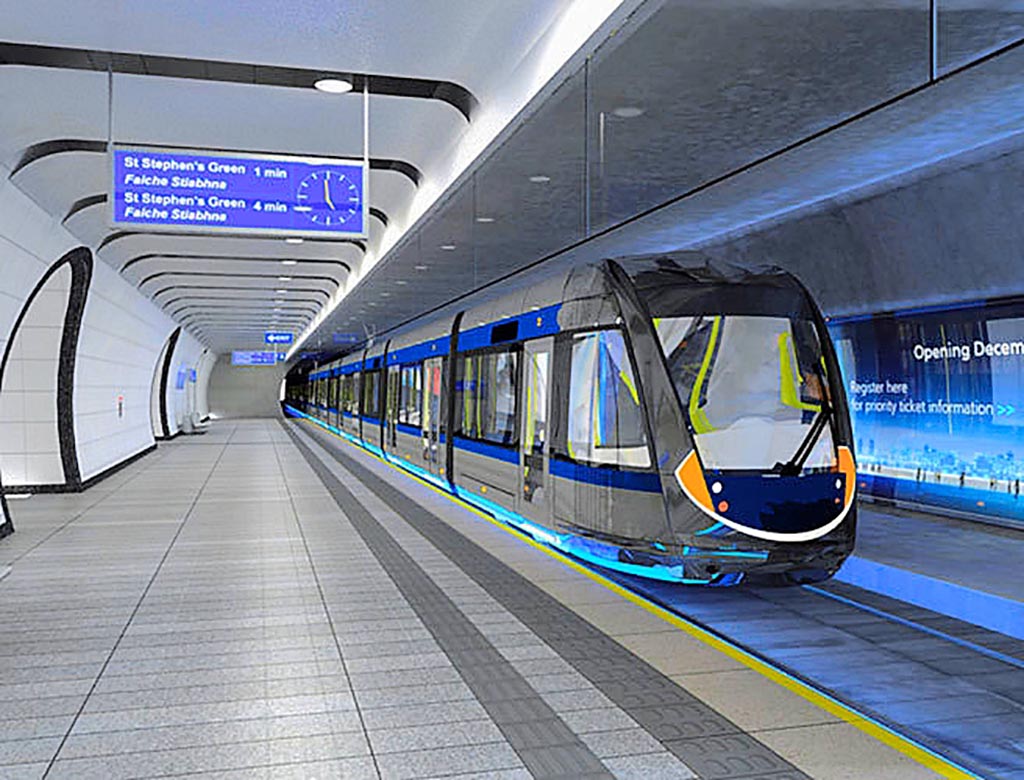
Work on the long-awaited MetroLink railway is set to begin early next year after the Government approved the project to move to detailed tendering.
Cabinet’s decision last Wednesday (16th) clears the way for market bids to be sought and partners selected to build and operate the 19km railway, which will connect north Dublin with Dublin Airport and the city centre.
Significant enabling works are due to begin early next year, followed by heavy tunnelling and the construction of 16 stations along the route from Estuary in Swords to Charlemont.
The project has a central estimated cost of €15.75 billion, excluding VAT, although the final cost will depend on the bids received from prospective construction and operating partners next year.
The detailed business case reviewed by the Department of Transport and the National Transport Authority estimates that MetroLink will cost between €14.44 billion and €17.49 billion.
The figures include inflation and contingency costs.
MetroLink will be Ireland’s first high-capacity, driverless railway and will run mostly underground.
The Government has described it as the largest single infrastructure project undertaken by the State since the construction of the Ardnacrusha hydroelectric scheme in the 1920s.

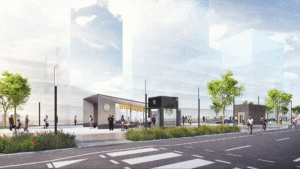
A CGI of what the Metrolink station in Ballymun will look like
For residents of Dublin North West, the line will provide direct connections from Ballymun and Glasnevin to Dublin Airport and the city centre.
It will also serve Dublin City University, the Mater and Rotunda hospitals and other locations along the route.

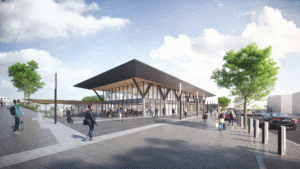
A CGI of what the Metrolink station in Glasnevin will look like
Interchanges with heavy rail, DART, Luas and bus services are intended to connect MetroLink with the wider public transport network.
Paul McAuliffe, Fianna Fáil TD for Dublin North West, welcomed this week’s decision as an important step for communities which have waited years for major public transport investment.
“This is a very significant step forward for MetroLink and particularly important for communities across Dublin North West,” he said.
“Ballymun and Glasnevin will be directly served by MetroLink, giving people a fast and reliable connection into the city centre, Dublin Airport and the wider public transport network.
“For people in Ballymun in particular, this is the kind of major public transport investment that we have needed for a long time.
“It will make a real difference to how people get to work, college, appointments and other parts of Dublin.”
MetroLink is designed to carry up to 20,000 passengers in each direction every hour, more than twice the capacity of the existing Luas Green Line.
Trains measuring 64 metres will operate every three minutes in each direction during peak periods when the railway opens.
Once completed, it is expected to carry up to 53 million passengers annually.
The proposed interchange at Glasnevin will allow passengers to transfer between MetroLink and heavy rail services.
A second interchange is planned for Tara Street, while a park-and-ride facility at Estuary will make the railway accessible to motorists using the M1.
Mr McAuliffe said the connections with rail, DART, Luas and bus services meant the effect of MetroLink would extend well beyond the communities located immediately beside its stations.
However, he said the priority must now be to maintain progress and ensure that this week’s approval is followed by work on the ground.
“People have heard about MetroLink for many years, so the priority now has to be maintaining that momentum and getting work underway,” he said.
“MetroLink has the potential to transform public transport across north Dublin and today’s approval brings that a significant step closer.”
The Government is also presenting MetroLink as a means of supporting large-scale housing development across Dublin.


Minister for Transport Darragh O’Brien (pictured above) said the railway could support the delivery of approximately 77,000 homes along its route.
Through its connections with other public transport services, the Government estimates that MetroLink could support the development of up to 200,000 homes across the Greater Dublin Area.
Mr O’Brien described the project as vital to reducing traffic congestion, improving access to Dublin Airport and enabling the construction of housing for a growing population.
“This is a game-changer for Dublin and the wider region as we work to deliver more homes,” he said.
“MetroLink will not only transform connectivity and access but also strengthen our economic competitiveness, support sustainable growth and unlock the development potential of communities across the Greater Dublin Area.”
As an electric railway, MetroLink is also intended to provide a lower-carbon alternative to private car travel, reducing traffic and transport-related emissions.
This week’s decision followed a joint review of the detailed business case by the Department of Transport and the NTA under the second approval stage of the Government’s Infrastructure Guidelines.
The review found that the assessed benefits of the railway exceeded its costs.
The benefits identified include shorter journey times and reduced traffic congestion.
However, the Government said firm cost ranges will only become available after bids are received from the market next year.
Taoiseach Micheál Martin said the decision reflected the Government’s commitment to investing in new infrastructure.
“MetroLink will help make our capital city a better, more sustainable place in which to live, travel, socialise and work,” he said.
“I am delighted that the Government has moved MetroLink into the detailed procurement phase for multi-billion-euro construction and operation contracts, and we will continue to support it into construction.”
Tánaiste Simon Harris said the railway would improve connections between Dublin and the national transport network while strengthening the economy.
He said a fast and reliable service would improve access to employment, education, healthcare, sports clubs, parks and other facilities.
“Projects like this are central to building the country our growing population now requires by helping to connect communities and unlock new housing,” he said.
Minister of State at the Department of Transport Seán Canney said the interchanges at Glasnevin and Tara Street, together with the Estuary park-and-ride facility, would allow passengers to transfer to MetroLink from rail services and cars.
He said Cabinet approval also sent a strong signal to the market that the Government intended to move its transport plans towards delivery.
Dublin Chamber welcomed the decision but said the emphasis must now be on preventing further delays and getting the railway built.
Stephen Browne, its head of public affairs, said Dublin could not meet the needs of its growing population and economy without major investment in transport infrastructure.
“The focus now must be on maintaining momentum, securing value through the procurement process and getting MetroLink built,” he said.
“The answer to rising infrastructure costs cannot be to delay essential infrastructure indefinitely. Dublin’s population, housing needs and economy continue to grow and the cost of congestion and inadequate transport capacity grows with them.”
Browne said Dublin had been discussing the development of a metro for decades and described this week’s decision as a shift “from discussion to delivery”.
“The priority now should be maintaining momentum, driving competition through procurement and delivering MetroLink as efficiently and quickly as possible,” he said.