
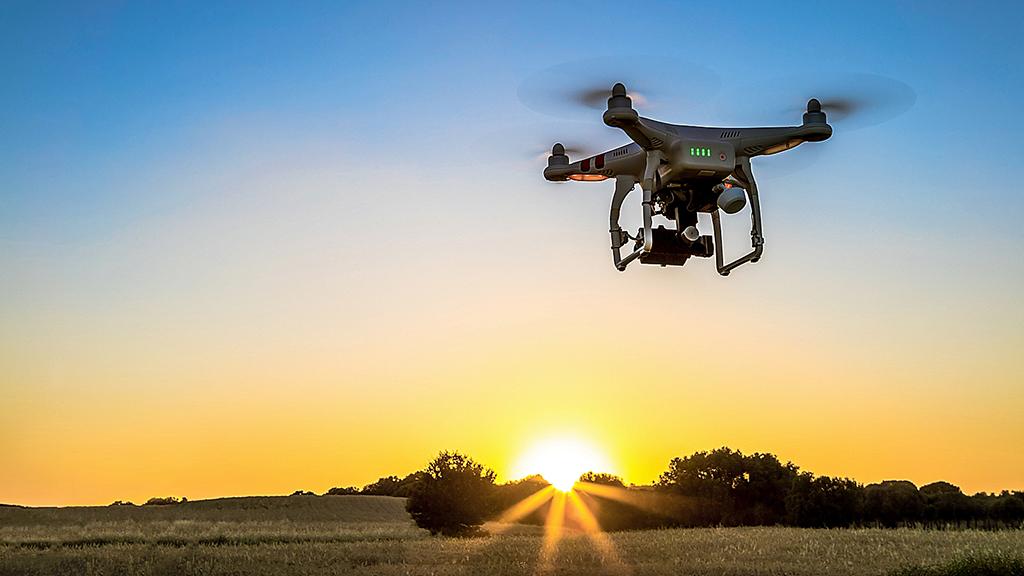
The sound of drones will no longer be heard in the Dublin 15 landscape.
Manna, the organisation which ran the controversial drone delivery service, announced they will be ceasing operations in the Dublin 15 area.
The organisation claimed Ireland’s planning process and the “absence” of a clear national policy framework for commercial drone delivery were the nail in the coffin.
The national policy framework for commercial drone deliveries was drawn up last August, but with no legislation related to commercial drones.
Drone Action D15 welcomed the news of Manna’s withdrawal, paying tribute to local elected representatives (from both government and opposition parties) who were opposed to the Manna operation in Dublin 15.
“It is time to realise that the planning process is one that offers protection to the public,” the organisation said.
“Campaign groups like ours draw our strength and can only operate where there is the strong body of support, as we saw in Dublin 15, in Cork, and other areas where drone delivery was sought. We want to thank our elected representatives who spoke so well about the difficulties around this service, introduced with no regulation around noise or privacy. “
The group said it was now up to the Irish Aviation Authority to “show us it is up to the task.”
“The IAA is lagging behind in responsibilities detailed in the framework policy, and the Department of Transport action plan for its implementation,” they said.
“The Irish Aviation Authority, funded not by the government, but by its regulatory clients such as Manna, has facilitated a private drone company by designating geographical zones in Dublin 15 where only Manna could fly without specific permission and prior notice,” they claimed.
“The IAA now has to shift from its role of disregarding community concerns around noise and intrusion to being leaders in community involvement, transparent procedures and care for our environment,” the group said.
Solidarity TD Ruth Coppinger welcomed news of Manna pulling out of Dublin 15.
The Dublin West TD said the news was “a victory for community campaigns over Big Tech.”
“This announcement shows that new technologies, which are worsening people’s lives for corporate profits, don’t have to be accepted as inevitable,” she said.
Coppinger stated, “people power has won out over a multi-million-euro corporation.”
She said that residents “who didn’t want noisy drones hovering over their home or garden were portrayed as luddites,” but residents had to put up with a “real erosion of their quality of life so a coffee or burger could be delivered aerially, rather than by delivery riders on electric bikes.”
“It was only when residents came together and organised campaigns that things began to change,” she noted.
“Ordinary people should take heart from this that nothing is inevitable, that activism can challenge big business,” Coppinger said.
The Solidarity TD said, “drones have massive positive potential for society – but commercial fast food delivery in residential areas is not one of them, and we now need legislation stating this.”
Labour councillor John Walsh welcomed the news, but said “there is no point in blaming local planners who are just doing their job.”
He said that the decision by Manna to cease operations “validates” the concerns expressed by local residents about the “striking lack” of national regulation of drones.
“The planners in Fingal acted professionally and responsibly to protect communities at a time of great uncertainty in national regulation and foot-dragging by government ministers, which led to a ‘Wild West’ situation in terms of regulation of commercial delivery drones,” the Castleknock councillor said.
Walsh laid the blame at the feet of the government.
“The government delayed the launch of a national policy framework for more than three years between 2022 and 2025, facilitating the emergence of an unrestricted commercial drone delivery service in Dublin West,” he said.
“This also meant that local council planners had to make decisions in the absence of effective national guidance. Fingal County Council rejected the drone delivery base in Coolmine because the noise impact assessment was insufficient and there was therefore a serious risk of noise pollution.”
Walsh said, “it is important to say that residents who objected to planning for drone bases were never opposed to drone technology, but concerned about the noise and environmental impact of an unrestricted drone delivery service.”
“A national policy framework is still needed to facilitate the many legitimate and valuable uses of drones by individuals and companies. The government should act to include the voice of local communities in future decisions about drones and create a strong regulatory framework that addresses the noise impacts and privacy implications of drones,” he said.