


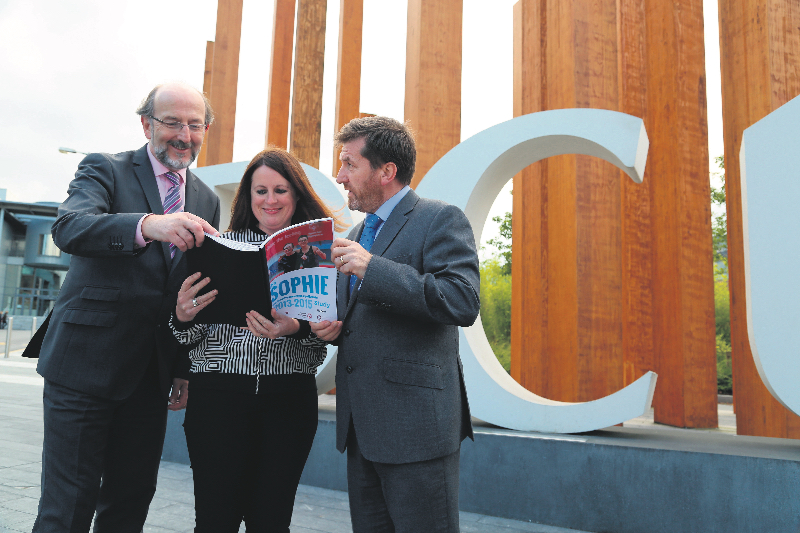
RESEARCHERS at Dublin City University have found that participants in Special Olympics programmes have a better quality of life than people with intellectual disabilities who don’t.
Participants in Special Olympics (SO) programmes were found to be more active, physically fitter and had a greater sense of well-being.
Their involvement also had a positive impact on their families who cited a greater social network and an increased sense of family pride at being part of SO.
The study found that the net present value (expenditure plus monetary value of benefits) of Special Olympics programmes was €4.5 million.
The SOPHIE Project (Special Olympics Programmes Health Impact Evaluation) was led by DCU’s School of Nursing and Human Sciences in collaboration with the School of Health and Human Performance, DCU, the University of York, and the School of Nursing and Midwifery, Queen’s University Belfast.
The aim of the research was to explore whether people with intellectual disabilities (ID) who took part in Special Olympics (SO) programmes are healthier and happier than people with ID who do not take part.
The study is the first of its kind taking into account detailed face-to-face surveys, physical measurements and qualitative information gathered from people with ID who take part in SO programmes and people with ID who do not.
Dr Mary Rose Sweeney, Senior Lecturer at DCU’s School of Nursing and Human Sciences and Principal Investigator of the study said the research provided some vital information.
“It will also provide useful insights into non-involvement by families of individuals with intellectual disabilities,” she added.
CEO of Special Olympics Ireland, Matt English, said the report highlighted the positive effects of participation in Special Olympics for athletes.
“It also underlines the challenges in providing opportunities at a local level, to participate in high quality sport and development activities that bring life-changing experiences of increased skills, self-confidence and joy,” added English who acknowledged the assistance of the Iris O’Brien Foundation who provided financial support for the study.
Special Olympics Athlete Aisling Beacom said: “I hope the report will help people understand why it is good to be in the Special Olympics programmes.”
A total of 292 participants took part in the research.