


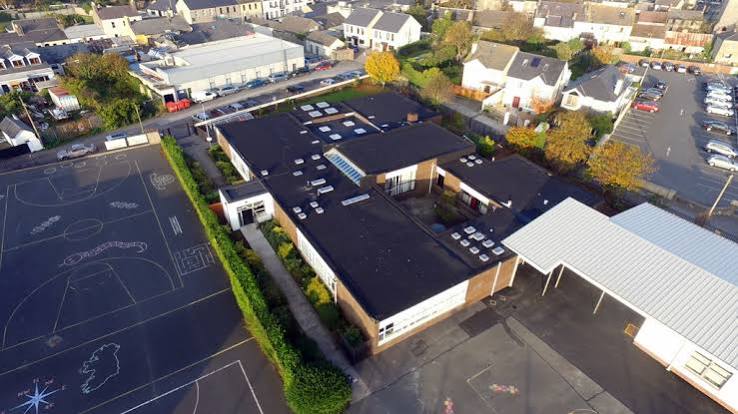
ALL three Dublin Fingal West TDs have put pressure on the government to reduce class sizes at St. Patrick’s National School in Skerries.


With the school at risk of losing a teacher, there is now the prospect of the school having 33 students in one classroom, well above the recommended academic standard of 23 students per 1 teacher.
Sinn Féin TD Louise O’Reilly, Labour TD Robert O’Donoghue and Fine Gael Grace Boland have said the situation is “unacceptable” and have raised the issue in the Dáil in recent weeks.
Boland criticised her government colleagues for not being proactive enough to resolve the issue.
“A class size of 33 is simply unacceptable,” she said, and expressed concern that the school was going to lose a teacher as it is above the mandated Department threshold for teachers employed.
“There has to be some flexibility here to retain the teacher. Parents, teachers, the wider school community and I am at a loss as to why we are going to lose this teacher. I urge the Minister of State to proactively engage with the school and do everything he can to retain the teacher,” she said.
Boland said she and the wider school community were “at a loss” at the prospect of the school losing a teacher when it was clear that more teachers were needed.
O’Reilly said that situation is “an absolute, bloody disgrace.”
“It is not feasible that there would be a class of 33. It is not fair on the students. It is particularly unfair on the students who have additional needs. It is not fair on the school community and the staff who work there.”
The Sinn Féin TD said that she and her fellow Dublin Fingal West TDs were “at one” on the issue.
O’Donoghue said that the population boom in the North County has not been anticipated by the Department of Education.
The Labour TD said that “the North County is exploding in its demographics and school supply is lagging behind there as it is.”
“I worked in a secondary school, so I know firsthand the impact increasing the number in a class by that size has on the attention students are going to get,” he told the Dáil.
O’Donoghue said it was important that the school retained the teacher for “a number of reasons.”
“The second class is going to go from 22 to 33 students if we lose the 11th teacher. If we add 50% to a class, it is so much more difficult for any teacher to address their needs,” he warned.
During the debate, the Dáil heard that the EU average is 19 children per classroom.
Fianna Fáil junior minister Michael Moynihan trotted out the government line that the government has invested a record amount of money in education in this year’s Budget, but as the healthcare service has proven, simply throwing money at an issue does not make it go away.
On the staffing issue, Moynihan explained that the Department’s staffing schedule is a “long-standing feature of the primary school staffing allocation system and is designed to ensure fairness, transparency and consistency in the allocation of mainstream teachers across all primary schools.”
The Cork TD explained, “the key factor in determining the level of mainstream teachers allocated to individual primary schools is the school’s recognised enrolment as of 30 September of the previous year.”
“The Minister is aware of the concerns expressed by parents and the school community in relation to staffing arrangements at St Patrick’s Junior National School in Skerries, and the importance of maintaining appropriate supports for all pupils, including autistic children and those with additional educational needs.”
He further expanded that “class sizes in schools are affected by a variety of factors, including enrolment fluctuations and available accommodation. Schools are best placed to determine the appropriate numbers in any class, so the configuration of classes and the deployment of classroom teachers is done at the local school level.”
Moynihan said that the Department’s guidance to schools is that the number of pupils in any class should be “kept as low as possible, taking all relevant factors into account.”
“School authorities should also, where possible, use the autonomy under the staffing schedule to implement smaller classes at the junior class level,” he said.
O’Reilly noted that the total number of students in St Patrick’s Junior National School is 267, which is above the 258 threshold.
“The Minister of State talks about the government wanting to reduce class sizes. That is very good, but how are the teaching staff, the SNAs and the school community expected to manage with 33 children in each of the classrooms? It is not very fair, so I am asking whether the teacher can be kept on pending the result of the appeal and the meeting with the Minister’s office,” she said.
O’Donoghue said, “when we are counting numbers, the reality behind it is that children in larger class sizes are having their education affected.”
“The teachers, who already have serious demands from the curriculum alone, are under immense pressure.”
“We are asking to protect the teacher, support the school, put the needs of children first and retain the teacher pending the appeals process,” the Labour TD said.
Moynihan further explained that in the 2025-26 academic year, the numbers at the Skerries school dropped from 281 students to 249.
The school has since then gone back up to 267 students.
The limbo surrounding whether the teacher will be kept on or not is reliant on the enrolment data submitted to the Department.
He noted that the issue was previously raised in the Dáil in September but at that time, the figures fell short of the threshold needed for an extra teacher to be allocated.
The school then submitted an appeal, of which the outcome is yet to be determined.
O’Reilly said the extra teacher not being kept on would be “disruptive” for the pupils.
“All I ask is that the teacher be retained pending the outcome of the appeal and that the Minister of State step in and stop a class size increasing from the average, 22, up to 33. That is too many. It is not fair on the school community and it is most definitely not fair on the students,” she said.