


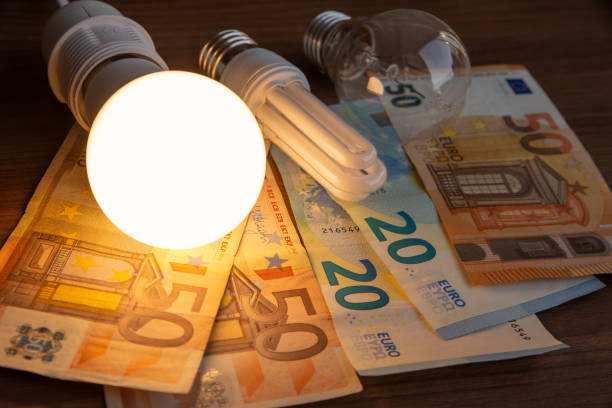
With the winter poised to be a tough one in terms of the energy crisis, the Social Democrats set out their plans to tackle the coming months.
Dublin Bay North TD and finance spokesperson Cian O’Callaghan said his party’s plan would “bring costs down permanently.”
“With back-to-school and college costs set to heap further pressure on household budgets in the weeks ahead, people are already pushed to the pin of their collar and simply cannot keep up with constant price increases,” he said.
“This government lurches from crisis to crisis without any clear strategy to make life affordable for ordinary people; Fine Gael and Fianna Fáil are caught in a doom spiral of haphazard emergency measures, reacting to the whims of Donald Trump without any clear plan to address the root causes of the crisis,” he said
To combat this, O’Callaghan and party colleague Jennifer Whitmore, party spokesperson on energy, have laid out what the party would like to implement, and what the government should be doing.
O’Callaghan stated, “we need to see targeted energy supports for low- to medium-income earners. The Social Democrats have repeatedly called on the government to introduce a €400 energy credit for households with incomes of less than €70,000 – a measure we hope will be included in October’s budget.”
“To pay for these supports, we are proposing that a levy be placed on data centres given their voracious consumption of energy and the inflationary impact this is having on household electricity bills,” he said.
Data centres have become a major target for opposition parties during the Dáil’s summer recess; politicians from Sinn Féin, Labour, the Greens and People Before Profit have all called for action of some sort on data centres, ranging from a tax to an outright ban on new ones being constructed.
Whitmore, TD for Wicklow, said that Ireland is “hopelessly dependent” on fossil fuels, and that heavy investment in solar power is needed.
“Our ‘Solar for All’ plan includes a doubling of grants for solar installation to €3,600, and the inclusion of solar panels in the ‘Warmer Homes Scheme’ to help families cut electricity costs by an average of €450 a year,” she said.
“Up to a million homes in Ireland are deemed suitable for solar panels and a nationwide installation programme could be completed relatively quickly. This is something we have been calling for since 2022, when the outbreak of war in Ukraine caused a major international energy shock.
The Russian invasion of Ukraine in 2022 sparked a cost of living crisis right across Europe, with Ireland being no exception.
With the war being joined by the ongoing conflict in the Middle East, the cost of living crisis is something the opposition are keen to twist the knife on.
To that end, Whitmore said that the government should support a Soc Dem bill which would redistribute surplus electricity to households, at no extra cost.
Whitmore said “last year, more than half a billion euros in renewable energy was wasted. This is scandalous when you consider there are now almost 320,000 electricity accounts in arrears, with customers in Ireland saddled with the highest energy bills in Europe,” she said.
“Curtailment” occurs when a wind or solar farm is told to reduce its output because the system cannot safely absorb all the power that is available, whereas “constraint” is when there is a localised network limitation, and the power lines cannot handle the load.
Whitmore explained, “in both cases, there is capacity to generate energy, but that opportunity is being wasted. Around 10% of available renewable electricity could not be used last year due to grid constraints and curtailment – the highest rate since records began in 2016. Solar curtailment in Ireland increased more than fourfold between 2024 and 2025.”
“If nothing is done, curtailment could reach 50% by 2030, which would double the marginal cost of generating electricity,” she said.
Whitmore stated, “we cannot afford one crisis after another. Instead of using the summer recess to prepare for the challenges that winter will bring – when soaring energy costs will really bite – the Government have just sat on their hands.”
“Once again, all we see are kneejerk, short-term measures that are incredibly costly and won’t make us resilient to future energy shocks.”