


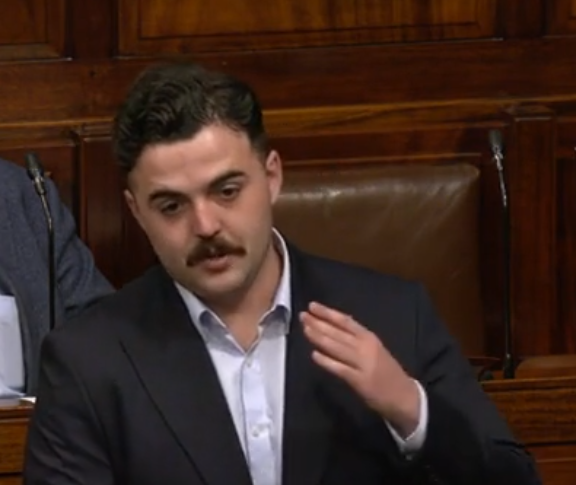
Independent TD Barry Heneghan has introduced the Electricity Regulation (Amendment) (No. 2) Bill 2026, Bill No. 53.5, in Dáil Éireann, calling for a modern, regulated framework for direct electricity connections between renewable sources and end users.
Heneghan, a mechanical engineer who completed his Master’s thesis at DCU on data centres’ waste heat utilisation and district heating systems, said he has been “passionate” about Ireland’s energy challenges since his college days.
The Bill aims to give more powers to the Commission for Regulation of Utilities to regulate direct lines, with a mandatory six-month decision timeline, full safety oversight and a public register of all connections.
Unlike the government’s current proposals, which limit private wires to specific circumstances, Deputy Heneghan’s Bill is open to all relevant users, from large energy users seeking direct renewable connections, to SMEs, housing developments, community energy projects and battery storage operators.
“Large energy users who want to connect directly to renewable sources nearby will benefit from this Bill. But so will the GAA club down the road, the school, the community hall and the small business on the street,” he explained.
He said the bill is about decentralising Ireland’s energy system and making clean energy easier for everyone.
Heneghan intends to expand the community benefit fund provision at Committee Stage, requiring Large private wire operators to make a proportionate contribution to local community projects, from GAA clubs to sports facilities and community infrastructure.
The Bill also supports energy sharing , more DSOs and SECs across Ireland ,Deputy Heneghan’s view is that new solutions are constantly coming to market and Ireland’s legislative framework must keep pace.
“Battery storage, energy sharing, the technology is ready. What is holding Ireland back is an outdated grid policy and a legislative framework that belongs to a different era. This Bill begins to change that,” he said.
The independent TD said the bill is designed to strengthen Ireland’s competitiveness for foreign direct investment by offering companies a guaranteed timeline for decisions on direct renewable energy connection, reducing cost, improving supply certainty and delivering on carbon credentials.
It also begins the process of decentralising Ireland’s electricity system, moving away from total dependence on the national grid toward a more flexible, resilient and locally responsive energy infrastructure.
Separate from this Bill, Heneghan is actively working on the safe rollout of plug-in solar for apartment dwellers and renters who do not have access to rooftops and are currently locked out of every energy-saving measure available to homeowners. He has raised this on the Dáil record and will continue to pursue it as a standalone policy priority.
The Taoiseach confirmed last week that the Minister will engage directly with Heneghan’s Bill as it progresses through the Houses.