


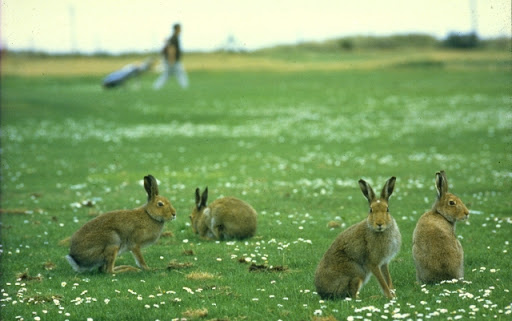
Nearly a decade after the last Irish hare was spotted on Bull Island, one Northside TD wants to see the native species hopping across the island once again.
Independent TD for Dublin Bay North Barry Heneghan has urged the Government to back a funded reintroduction programme for the Irish hare on Bull Island, saying its disappearance represents a major loss for local biodiversity and Irish heritage.
Speaking in the Dáil this week, Deputy Heneghan said the loss of the Irish hare from Bull Island represented a significant blow to local biodiversity and Irish heritage.
The last confirmed sighting of the native species on the island was in 2016.
“Bull Island is one of the most special natural spaces in Dublin and part of the UNESCO Dublin Bay Biosphere,” Deputy Heneghan said.
“Growing up, I remember seeing Irish hares there regularly. It is deeply sad that they are now gone.”
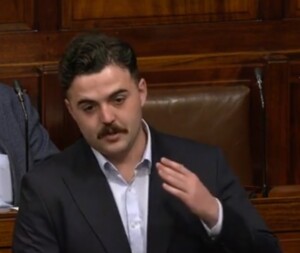

Deputy Heneghan (pictured above) said the Irish hare has deep cultural and historical importance in Ireland.
“The Irish language was developed alongside our native species, and the Irish hare is deeply rooted in that history,” he said.
“The word ‘giorria’ comes from ‘gearrfhia’, meaning small deer. Our wildlife and our culture have always been connected.”
The Dublin Bay North TD pointed to the continued presence of the hare in local identity, noting that the animal still appears on the crest of St. Anne’s Golf Club.
“You can still see the Irish hare represented on the crest of St. Anne’s Golf Club,” he said.
“That shows how connected the animal remains to the identity and history of the area, even after disappearing from the island itself.”
Deputy Heneghan also said conversations with local grounds staff suggested the species had historically coexisted well with the landscape on Bull Island.
“I was recently speaking with a greenskeeper on the island who made the point that hares were never seen as a problem,” he said.
“Unlike rabbits, they do not burrow or damage the course. In many ways, they suited the landscape perfectly.”
During the Dáil exchange, Danny Healy-Rae interjected to say he had “welcomed four young hares” into his field recently, prompting laughter in the chamber and drawing further attention to the discussion around protecting native wildlife.
Deputy Heneghan said the exchange reflected the affection many people across Ireland still have for the Irish hare.
“The reaction in the chamber showed that people right across the country value the Irish hare,” he said.
“This is not just about one island. It is about protecting a species that is part of Irish life and identity.”
The TD said he had already discussed the issue with Junior Minister Christopher O’Sullivan and welcomed the Minister’s work on biodiversity and nature restoration.
“I have spoken positively with Minister Christopher O’Sullivan, who has done a lot of great work in this area, and I will continue engaging with him about the potential reintroduction of the Irish hare to Bull Island,” he said.
Deputy Heneghan said he had also previously raised the issue at the Oireachtas Climate and Energy Committee, where he received what he described as a positive response from witnesses and experts.
“There is recognition that restoring native species through carefully managed reintroduction programmes can play an important role in biodiversity protection,” he said.
He added that any future reintroduction programme would need to take place outside the peak breeding season and in line with ecological guidance.
“If we are serious about restoring native species, we need to start preparing now,” he said.
“The appropriate time for any reintroduction work would be outside the peak breeding season, with autumn and winter offering the best opportunity for planning, habitat preparation and managed release.”
Deputy Heneghan said he intends to continue raising the matter through Oireachtas climate and biodiversity committees and with the relevant authorities.
“This is about restoring part of Dublin’s natural heritage for future generations,” he said.
“We have lost the Irish hare from Bull Island once and we should not accept that loss as permanent.”