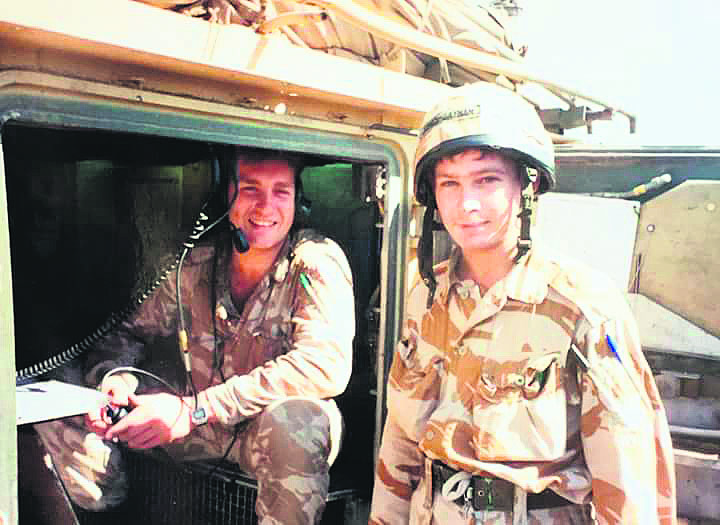
IT’S estimated that 30 per cent of men and women who have spent time in war zones experience Post-Traumatic Stress Disorder. Northsider Fergus Kenny is just one of them.
Originally from Baldoyle, Fergus (47) followed in his father’s footsteps by joining the Queen’s Irish Royal Hussars in September 1989. A year later, he was deployed in the Gulf War where he celebrated his 21st birthday.
Fergus would serve in tours and warzones around the world including Bosnia and Cyprus as part of a Northern Irish regiment.
Speaking about his time in service, Fergus highlighted the importance of the bond between him and his fellow soldiers.
“The Irish Hussars was a great example of how Irish men, Catholic or Protestant, could get along,” Fergus told Northside People.
“Ask any veteran and the biggest thing they will miss and they will all say is the friendships you make.”
Fergus served for 25 years before sustaining an injury on deployment in Iraq in 2005 which led to him being evacuated.
He wasn’t officially discharged until 2007, but soon after he returned from his last deployment, Fergus realised that he “came back as a different person”.
Post-Traumatic Stress Disorder is a condition that develops in some people who have experienced a shocking, scary or dangerous event.
Fergus declined to describe the details of the traumatic events he went through but insisted he had “a few close calls”.
“I’ve been very lucky,” he said. “If I was a cat I’d have used my nine lives. I’ve seen a lot of things that will stay with me forever.”
It can take an average of 12 years for the symptoms of PTSD to appear, with symptoms differing in each case.
Fergus was initially unaware he was suffering from this PTSD, before he was referred to Combat Stress, a veterans’ mental health charity based in the UK.
The effects of PTSD can be invisible to many people, but Fergus spoke about the very clear effect it began to have on his life.
“I nearly lost my kids due to PTSD, and I have had two relationship break-ups,” he said. “I am also emotionally numb and constantly on edge when I’m outdoors.”
Fergus has been able to get support from Combat Stress to cope with his symptoms and live what he describes as a “semi-normal life”.
He said that while it is good that people are more aware of PTSD nowadays, not enough people know of the effects it can have on day-to-day living.
“A veteran with PTSD is totally different from what a civilian will suffer due to the trauma they go through and what they see,” he added.
“PTSD cannot be cured, but you can learn how to cope.”
REPORT: Daniel O’Connor