
THE
2012 budget to be announced next month will be one of the harshest ever
inflicted on this State. But for one Northside teenager it could decide whether
or not he can remain in school.
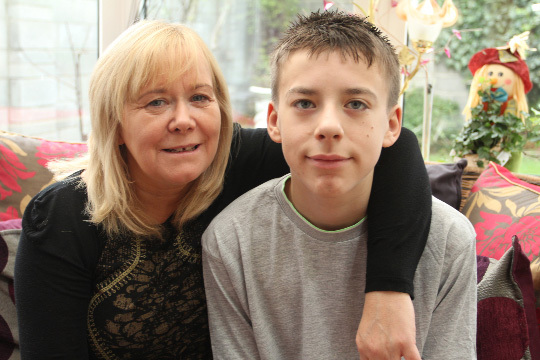
Nicholas
Dillon (14), from Glasnevin, suffers from Asperger’s Syndrome, or
high-functioning autism, and has relied on a special needs assistant (SNA) to
help him through school since the age of seven.
However,
speaking to Northside People last week, his mother Sandra said her family fear
Nicholas could lose his SNA under budget cutbacks and end up in full-time
psychiatric care as he will not be able to cope with school.
“When
he started primary school Nicholas kept being put outside the door because
teachers didn’t understand him,
? Sandra told Northside People.
“They
thought he was just being bold or clumsy, but problems with coordination and
communication are just part of his condition. His concept of language is very
different; it’s very literal and he has extreme anxiety which increases with
age.
?
After
years of constant battling with the HSE to access the necessary supports and
services, Nicholas was eventually assigned a shared SNA. His mother is certain
that all his progress dates from then.
“That’s
when things started to make a lot more sense for Nicholas,
? she explained.
“His
English and Maths started to improve. He learnt to communicate better. The
school has been brilliant and the principal Kieran O’Hare is so supportive.
“His
SNA is fantastic and I know he would not be in school without her,
? added Mrs
Dillon.
Even
with an SNA, Nicholas needs extra home tuition to be able to keep up
academically with his classmates. A lot of children with his condition end up
dropping out of school because they can’t handle exam stress and suffer from
mental health issues.
Sandra
and her husband John, like so many parents of autistic children, have to pay
privately for support tuition. They also fork out e1,000 a year so that
Nicholas can attend their local branch of ASPIRE, a support group for families
affected by Asperger’s Syndrome.
This
weekly meeting teaches Nicholas vital life skills including understanding money
and how to avoid danger and overcome bullying.
Nicholas’s
father John has organised a weekly football club for his son and others with
his condition, enabling them to enjoy the game at their own level.
Sandra
also set up a social club at the Finglas Youth Resource Centre for young people
with Asperger’s, autism, dyspraxia and dyslexia. Between 20-25 children and
teenagers meet there every week to socialise, have fun and take part in
activities and outings.
But
like thousands of other families affected by disability in Ireland, the
exhaustive work of full-time caring and the lack of adequate State support
takes its toll on the Dillon family.
Sandra,
aged 50, suffers from acute anxiety and is on medication. She has been off work
sick because of anxiety ever since Nicholas was born. John, a bus driver, had a
stroke two years ago.
He
was paralysed down the left side, but luckily got all his power back within a
week. But he still needs frequent hospital visits.
Sandra’s
elderly mother also attends hospital regularly, meaning that sometimes Sandra
is effectively caring full-time for three people.
“My
husband and mother have to go to the warfarin clinic, or else she needs to go
to Cappagh Hospital to get her knee done. In the meantime, I have to fight all
the time to get any kind of support for Nicholas. It’s also affected my other
children, Jonathan (24) and Nadine (22).
?
Ever
since Nicholas was born, Sandra says she has been fighting to get him the
supports that are automatically in place for children without a disability.
“When
children are born, they’re given their BCG, their MMR vaccinations, the State
looks after their teeth. But when your child has a disability, once you get the
diagnosis, it’s goodbye.
?
The
Dillons are desperately afraid that their scant social welfare support from the
State will be further cut in the budget.
Sandra
and John Dillon are part of the
“invisible workforce
? of unpaid carers in
Ireland, providing full-time care in spite of their own health problems.
A
pre-budget submission lodged recently by the Carers’ Association implores the
Government not to cut carers’ payments and services any further, and warned of
the dangerous knock-on effects of cutbacks.
Jacqueline
Millman, manager of the Carers’ Association Centre in Blanchardstown, said some
family carers are being forced to make huge sacrifices and sometimes skip meals
in order to make ends meet because of the cutbacks already imposed since Budget
2009.
“Family
carers also have to survive with these cuts in a climate of increased costs in
health related services combined with the hidden costs of caring including
increased heating costs, medical and hospital bills, transport, dietary and
incontinence costs,
? she said.
If
family carers stopped providing care in the morning, the Carers’ Association
estimates that the cost to the State to replace this work would be almost e4
billion a year. The cost of paying Carers’ Allowances is currently
?¬540
million.
“Finding
ways to support family carers, not take essential payments and services away
from them, is a win-win approach for the care recipient, the family carer and
the public purse. But it comes down to this: if the State doesn’t care, how can
we continue to care?
?