


Facebook, TikTok, and Twitter; three of the pillars of social media, all with European headquarters in Dublin.
All three companies have come under fire for their hands-off policies regarding content moderation since the re-election of Donald Trump in 2024, with real-life consequences.
In the aftermath of Trump’s re-election in 2024, Facebook changed their content moderation policies, so that it became okay to refer to members of the transgender community as “mentally ill” and not face any consequence.
Zuckerberg, in his attempt to placate Trump, also gutted moderation staff on Facebook and Instagram in a bid to appease the American president.
In June, Facebook was used to organise pogroms on immigrant communities across the North of Ireland, and has changed its algorithms so that more right-leaning content is seen by users regardless of them engaging with political content on Facebook or Instagram.
As a test, a dummy account was set up by the Northside and Southside People in May, did not like any pages, did not engage with any content, did not leave a comment, and told Facebook to suggest political content.
Over the course of a bi-weekly check-in to see what the algorithm has fed a dummy account, Facebook’s newfound political bias became apparent.
Content from the National Party and their various representatives was shown to us, as was content that promoted an anti-immigrant viewpoint.
Pages called political figures such as Simon Harris and Mary Lou McDonald “traitors” who have “failed Ireland” despite being two political figures who could hardly be more different in terms of ideology and beliefs.
In June, during the anti-immigrant riots in Belfast, content which called for people to turn off Ring cameras so they would not be caught by law enforcement and told people to “get ready to fight” was reported; Facebook did not find any reason to delete those posts.
This week, TikTok has found itself in the firing line after content on their platform was linked to the fatal car crash on the M9.
Various outlets have reported that content, showing users flagrantly breaking various traffic laws, was kept up on TikTok despite the content being reported and in breach of safety standards.
Coimisiún na Meán, Ireland’s media regulator, said they were in contact with TikTok about unlawful videos being published on their platform and being allowed to remain on there without any consequence.
TikTok’s algorithm is industry-renowned for shifting to the tastes and interests of the user, and the platform enjoys popularity across the political spectrum.
Then, there is the curious case of Twitter.
In January of this year, a political firestorm ensued after the website’s generative AI tool Grok was being used to produce child sexual abuse material.
In the aftermath, political parties such as the Green Party, Labour, the Social Democrats and various progressive politicians chose to stop posting on the platform.
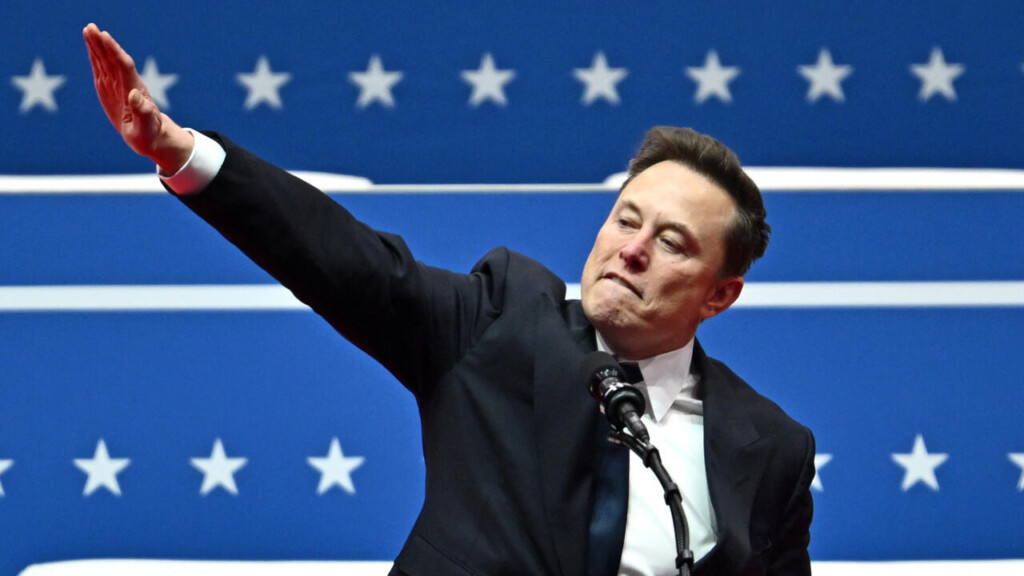
Twitter’s hard shift to the right isn’t new information, with the political beliefs of Elon Musk being the main factor in the South African trillionaire’s purchase of the site in 2022.
Musk claims that he is a free speech advocate, and then proceeded to change the Twitter algorithm so that political views relevant to him (namely, anti-immigration and anti-LGBTQ+ content) were fed to the user.
Since Musk’s takeover of the website, the user base has plummeted, with the likes of Threads and Bluesky picking up the slack.
Aside from a few souls who remain on the website for sports news, the website doesn’t set the narrative as much as it used to a decade ago.
Similar research has been carried out by academics where various accounts are created, without any interaction with other accounts or giving any indication of being interested in political content, and yet the dummy accounts are shown anti-immigrant, anti-LGBTQ+ content.
All of these examples reveal an ugly, inconvenient truth; those three companies help pay Ireland’s corporate tax, which plays a part in Ireland’s much-touted budget surplus, but it is coming at the expense of social cohesion.
In a hypothetical scenario where this publication published a piece dubbing a member of the transgender community as “mentally ill” or ran an editorial claiming that “Ireland is a Catholic country and Muslims are not welcome here,” we would rightfully be subject to a disciplinary process by the Press Council of Ireland and would suffer consequences.
Likewise, if we were to publish a piece which labelled Micheál Martin a “traitor,” we would face legal action and, rightfully, face reputational damage as a result.
On Facebook and Twitter, comments like those represent an average Tuesday.
If traditional media is subject to so many of these rules and regulations, how come social media giants are allowed to operate without any consequences or legal ramifications within our fair city?
This became blatantly clear in January in the wake of the Grok scandal on Twitter; despite French authorities sending police into Twitter’s Paris HQ amid suspicions that the social media site was not co-operating over laws relating to the handling of child sexual abuse material, the Gardaí did not follow suit.
Governments do not have operational control over police forces – outside of Stalinist Russia – but it is not hard to read between the lines.
Those shiny office buildings across Dublin will not be touched because the government thinks that tax revenue triumphs basic social decency.
As far as the government are concerned, they are terrified of annoying Zuckerberg and Musk because it will come at the cost of six-figure salaries in the tech industry and the PRSI contributions that come with it.
On Kendrick Lamar’s seminal 2015 album To Pimp A Butterfly, the rapper asks How Much A Dollar Cost, with the lyrics reflecting on what the true cost of wealth is.
Ireland’s modern economy can rightfully be called a success story, and in the context of Dublin, the development of the Silicon Docks is a net positive, turning an underused area into the engine of Ireland’s high-tech economy.
And yet, underneath the glass facades and on server banks, there is an unravelling of the values that made Ireland great to begin with.
There has always been a boogeyman for all of society’s ills; in the 1980s it was violent horror movies and heavy metal, in the 2000s it was violent video games and aggressive rap music, but social media is the corrosive force that moral guardians have always warned about.
Minister for Justice Jim O’Callaghan said, “events such as this (the crash on the M9) emphasise that social media companies have a responsibility to enforce their own code of conduct which prohibits content that glorifies criminal behaviour.”
The Minister’s comments speak to the mood at the heart of the government; in so many words, he said “the onus is on the social media companies, but don’t come looking to us for answers.”
CorkBeo editor and media personality Joe O’Shea articulated the government’s attitudes (or lack thereof) towards social media companies.
“TikTok will do what Facebook and all the rest of them do – take two weeks to issue some bulls**t ‘we take our responsibilities very seriously however we cannot be responsible blah blah blah ‘ – any attempt to regulate will be met with all-out war. When are our politicians going to realise this?”
As far as the government sees it, picking a fight with social media companies isn’t worth the hassle.
Rolling out the red carpet for tech companies looks great for the government in a press release – just recently, OpenAI announced they will be opening a new office right here in Dublin – but it comes with a very real social cost.
The splintering of social media into different camps (progressive versus conservative, woke versus traditional, pronouns in email signatures versus rolling your eyes whenever a female pundit appears on a sports panel) is the system working exactly as designed.
The big question is an uncomfortable one; with October’s budget coming up, it is likely that the surplus will be dipped into as a difficult, lean winter is coming up.
How do people feel knowing that the government supports are funded by immigrants, members of minority groups, and different religions being terrorised and demonised on social media platforms? Or is that just the price you pay for good GDP numbers?