


Sinn Féin leader Mary Lou McDonald has said that mental health services are “underdeveloped” in Ireland.
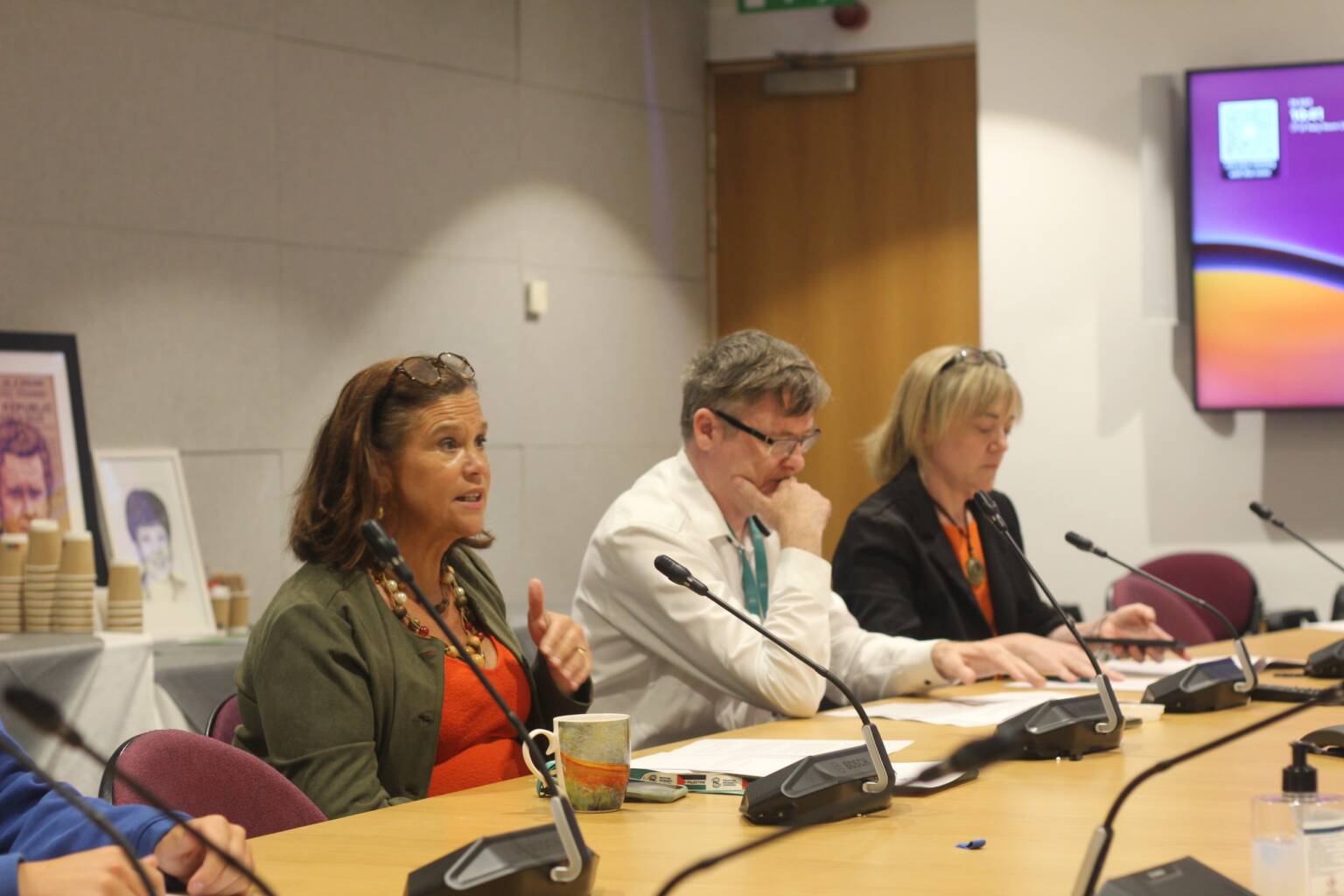
Last week, McDonald, Sinn Féin’s health spokesperson David Cullinane and mental health spokesperson Sorca Clarke, hosted a roundtable discussion on child and youth mental health, with representatives from Jigsaw, Mental Health Reform, the National Youth Council, and other groups in attendance.
The party said the aim of the meeting was to hear directly from those working with and advocating for young people and “most importantly, young people themselves.”
The discussion focused on the “urgent” need to support and promote youth organisations, prioritise wellbeing and prevention supports, ensure early access to help and care, and tackle lengthy waiting lists to ensure no child or young person is left without the support and care they need.
Participants highlighted significant barriers to accessing support, including a lack of clear information about available services, uncertainty around referral pathways and waiting lists, and confusion about where young people and families should turn for help.
McDonald said that the discussion “reinforced” what the party has been told for years – that child and youth services, and mental health services, are underdeveloped and inadequate.
“The role which youth organisations play in positive mental wellbeing cannot be understated, yet the sector is underfunded and inadequately supported. Youth work, community services like Jigsaw, and primary care counselling play a critical role in maintaining positive health, and preventing the need for medical intervention in the first place,” she said.
The Dublin Central TD noted, “where those supports are not present, or where children need a higher level of care and support, children are left waiting months, and in many cases more than a year, for an assessment with CAMHS while families struggle without the support they desperately need.”
“Between the gaps in local services and the capacity shortfall in specialist care, it is clear that the current system is failing too many young people,” McDonald stated.
The roundtable discussion heard that specialist services remain under “immense pressure”, and that greater investment in primary care, youth services and early intervention is “essential” to enhance Ireland’s mental health services.
The meeting heard that Ireland’s mental health service is deteriorating to “crisis point.”
Participants stressed that early intervention remains “significantly” under-resourced despite being one of the most effective ways to improve outcomes.
They called on government to properly fund and invest in youth services and organisations that already have trusted relationships within communities and the infrastructure to provide holistic, community-based support if adequately resourced and staffed.
Cullinane, Sinn Féin’s spokesperson on health, said “we were grateful to hear directly from organisations working on the frontline of youth mental health and from those representing the voices of young people themselves.”
“Their experience made it clear that services must become more joined-up, with better links between schools, GPs, community organisations, disability services and specialist mental health teams.”
The Waterford TD said “we also heard the importance of ensuring every community has access to safe spaces and local youth services where young people can build trusted relationships and access support before problems escalate. Tackling social isolation and improving connectivity between services must be a priority for government.”
The meeting heard that a reform of the CAMHS system is needed.
At present, once a child turns 18, they are no longer able to avail of the CAMHS system, resulting in a cliff-edge where children who were treated by specialists in adolescent psychology are suddenly shifted into adult care.
For many within the CAMHS system, there is a belief that the current system is too abrupt a shift, and that a reform is needed.
The meeting heard that CAMHS services should be enhanced to allow patients to avail of the service up until the age of 25, and allowing patients to remain with the adolescent specialist they have developed a rapport with.
The transition from CAMHS to adult mental health services is “abrupt,” the meeting heard, and “leaves many young people without continut of care.”
The discussion also highlighted the role of parents and families in supporting young people’s mental health and the need to ensure they have access to information and appropriate supports throughout their child’s care journey.
Participants emphasised the importance of collecting and using better data to identify unmet need, inform service planning and ensure resources are targeted where they are most needed.
Sorca Clarke, the party’s spokesperson on mental health, said “there was a strong consensus around the table that reform cannot be limited to reducing waiting lists alone.”
The Longford-Westmeath TD said “we need a whole-system approach that prioritises prevention, early intervention and timely access to care. Young people should never be left without support simply because they do not meet a service threshold or because they turn 18. “
“The priorities identified were clear: improve accessibility, strengthen early intervention, invest in community-based youth services and facilities, support parents, and ensure decisions are driven by accurate data rather than guesswork. “
She said “the time for excuses has passed. We know where many of the problems lie and government must act.”
Clarke said “this discussion will help inform Sinn Féin’s work as we continue to develop practical policy proposals that deliver better mental health outcomes for children, young people and their families,” and thanked Jigsaw, Mental Health Reform, Youth Work Ireland, the National Youth Council of Ireland and Comhairle na nÓg for their “valuable contributions” to the discussion.