


The latest round of tech layoffs has led to concerns that Ireland’s economy is uniquely exposed to the rise of AI.
Last week, Facebook informed the government that they plan to lay off nearly 350 staff, the latest in a round of cuts that the company blamed on the uncertain economic climate and advances in AI technology.
From a peak of around 3000 during the pandemic era, there are now 40% fewer people working for the social media giant in Dublin than this time in 2023.
The latest round of job cuts will see the headcount reduced to around 1500.
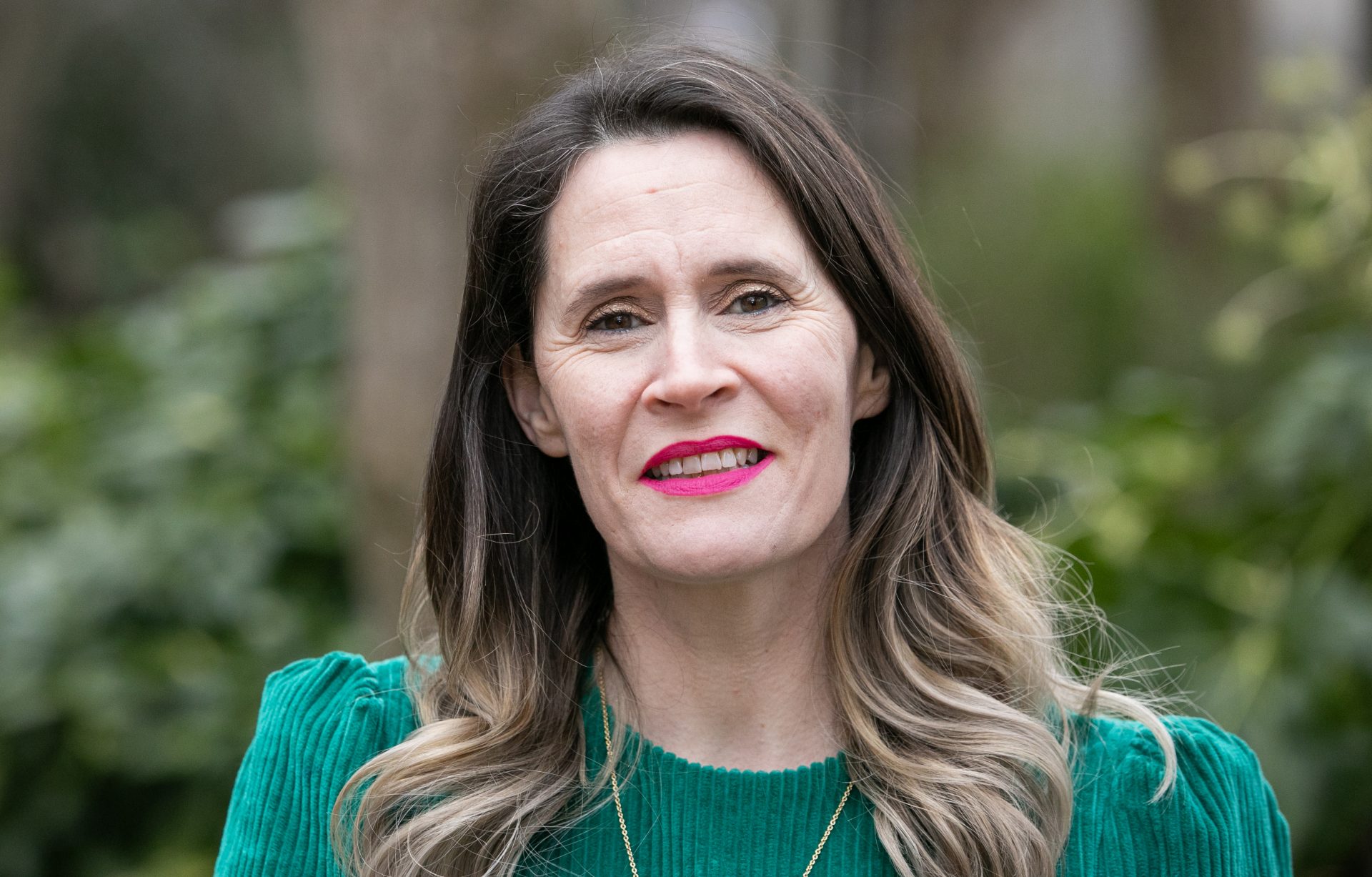
Social Democrats TD Sinéad Gibney said, “each round of cuts has come with weaker and weaker protection of workers’ rights.”
She said that the Minister for Enterprise must meet with the Oireachtas AI Committee to discuss what regulations are needed to prevent mass unemployment as a result of AI.
In April, Gibney warned that the government are “sleepwalking” into the AI age and the economic realities that come with it.
The Dublin Rathdown TD noted that Facebook’s quarterly profits stood at $26 billion in its most recent round of results, but have stil made the decision to cut 10% of their global workforce.
“These mass layoffs, which we are observing across the sector, can only be attributed to the rise of AI. A company which serves its stakeholders will do anything to cut costs, even at the expense of its workers,” she said.
“We’ve seen this throughout history; when technological breakthroughs are achieved, a strata of workers is made redundant. In Ireland, we saw this with containerisation in the 1970s, when dock workers were let go in their masses due to advances in mechanical systems which could unload ships.”
Gibney said that the government runs the risk of repeating itself.
“There was no plan in place for those workers, whose families and communities were devastated by unemployment. Today, the government has no coherent plan for those who will be laid off by their employers as they adopt AI to cut costs,” she warned.
“What will result is a perpetuation of wealth inequality – companies will report greater profits as a result of the unpaid salaries they save, and communities will become poorer as unemployment rises. Unlike containerisation, the rise of AI will lead to redundancies across multiple sectors, many of which are dominated by middle-class, administrative jobs.”
Gibney noted that another wave of tech lay-offs, which hit Ireland in 2022 and 2023, puts a greater strain on Ireland’s welfare system.
“Rising unemployment brings a greater demand for welfare supports from the State, a decrease in taxes being paid on salaries and in our local economy, leading to a narrowing of our tax base, and, ultimately, concessions being made on the delivery of public services,” she warned.
She commented, “the only party that profits from these redundancies are CEOs and company shareholders.”
“The government likes to say that those who are made redundant due to AI will be retrained, but this is not a solution – the jobs that those programmes are designed for will become fewer and fewer as the competition grows for employment,” Gibney said.
“Our reality is one in which multinational companies are becoming wealthier than states, the former whose only responsibility is to its shareholders, the latter whose responsibility is to the well-being of all of its citizens.”
Gibney predicted that AI “will be the defining technological advancement of this generation, and the decisions we make regarding its regulation will shape our future.”
“I am requesting that the Minister for Enterprise engage with the Oireachtas AI Committee to ensure that AI does not become the great divider it threatens to.”