


The Government last week declared Dublin’s housing pipeline “robust”, pointing to almost 79,000 permitted homes and more than 31,000 homes either built or under construction across the capital.
Ministers hailed the latest quarterly figures as evidence that the housing system is finally gaining momentum after years of crisis.
But outside Government Buildings, many Dubliners may struggle to recognise the success being described.
For renters who have to hand over more than half their monthly pay packet to keep a roof over their heads, couples unable to buy despite solid incomes, young adults still living in childhood bedrooms well into their 30s and families trapped in overcrowded accommodation, the language of “active sites”, “pipeline delivery” and “planning capacity” may sound very far removed from daily reality.
At the centre of the Government’s announcement was one headline figure, 78,658 residential units with planning permission across Dublin.
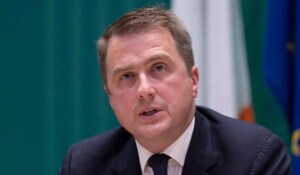

Housing Minister James Browne (pictured above) described the figures as proof that “the system is moving in the right direction and that homes are being delivered at scale.”
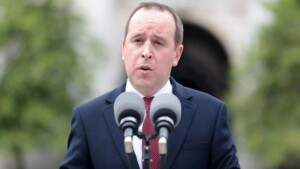

Planning Minister John Cummins (pictured above) meanwhile pointed to falling planning backlogs as evidence that targeted investment in the planning system was “working”.
On paper, the numbers certainly appear impressive.
More than 24,000 apartments are now under construction across Dublin.
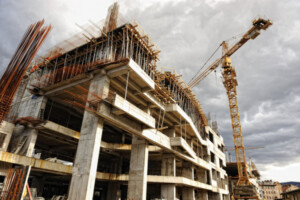

Fifteen new schemes became active during the first quarter of 2026, adding almost 1,500 homes into the construction phase, while 19 schemes were completed.
The Government’s broader argument is clear, the housing machinery is now functioning more effectively than it was several years ago.
But critics will argue the announcement relies heavily on statistical framing designed to create the impression of rapid progress while obscuring the more uncomfortable question at the heart of the crisis, are enough affordable homes actually reaching ordinary people?
Because hidden within the Government’s release was another figure, one that arguably matters far more than permissions, commencements or “pipeline activity”.
A total of 2,141 homes were completed in Dublin during the first three months of 2026.
That is the number that ultimately affects renters, buyers and families searching for somewhere to live.
Planning permissions, after all, are not homes.
Commencements are not homes.
Active sites are not homes.
Only completed homes are homes.
And even completed homes do not necessarily solve the crisis if large numbers remain financially out of reach for average earners.
One of the major weaknesses in the Government’s messaging is the repeated reliance on pipeline statistics as proof of delivery.
Permissions are politically useful because they create the appearance of momentum, but Ireland’s housing crisis is littered with developments that secured approval only to stall for years or disappear entirely.
Sites can remain inactive due to rising construction costs, financing problems, legal challenges, infrastructure delays or changing market conditions.
Thousands of approved homes across Dublin have remained trapped in limbo for years despite existing on official housing tallies.
That disconnect between statistical progress and lived reality has become one of the defining features of Ireland’s housing debate.
Government figures increasingly point to movement within the system, yet many Dubliners say they continue to experience the crisis in almost exactly the same way.
Rents remain extraordinarily high across the capital and competition for rental properties remains fierce.
The impact of the government’s new rent rules was revealed this week as the latest Rental Report by Daft.ie showed that market rents rose sharply in the first quarter of 2026 with the national average increasing by 4.4%, the largest quarterly increase in rents since 2002.
The average rent for a two-bed apartment is now €2,600 in Dublin, a rise of 6.9%
First-time buyers continue to face enormous barriers to entry.
Homelessness figures remain high.
Many younger workers increasingly feel home ownership in Dublin has shifted from difficult to almost impossible.
For some, the crisis is no longer simply financial but psychological.
Teachers, nurses, retail workers, hospitality staff and young professionals often speak openly about feeling stuck, unable to progress to the next stage of adult life despite years of work.
Living at home into one’s 30s has become normalised for large sections of Dublin society.
Others face exhausting commutes from distant counties after concluding there is simply no viable path to living near their workplace.
That reality sits uneasily beside official claims of “delivery at scale”.
There are also likely to be growing questions around the type of housing being built.
The Government highlighted the significant increase in apartment construction across Dublin, with more than 24,000 apartments currently under way.
But many recent large-scale developments in the capital have been dominated by Build-to-Rent schemes, often aimed at institutional investors and carrying rental prices that remain out of reach for many ordinary workers.
Critics argue that simply increasing unit numbers does not automatically address affordability.
A city can technically increase housing supply while still becoming unaffordable for large sections of its population.
That distinction is crucial and often missing from political announcements celebrating construction activity.
The Government release also made no reference to the actual cost of renting or buying these homes once completed.
Nor did it address broader concerns around social housing supply, affordable purchase schemes or the long-term viability of apartment-heavy development patterns for families.
Instead, the language of the statement remained heavily technocratic throughout, focusing on “units”, “active sites”, “pending applications” and “pipeline momentum”.
To many Dubliners, that language increasingly feels detached from the human reality of the crisis.
Because housing is not experienced as a spreadsheet.
It is experienced through bidding wars for rental properties, impossible mortgage calculations, crowded house shares, rising anxiety and uncertainty about the future.
The reduction in planning backlogs may indeed represent genuine administrative progress.
The number of units awaiting planning decisions has fallen significantly since late 2022, something the Government says reflects improved resourcing at An Coimisiún Pleanála.
Faster decisions undoubtedly matter.
But the housing crisis has evolved far beyond a simple planning problem.
The deeper issue now confronting Dublin is whether enough genuinely affordable homes can be delivered quickly enough to match population growth, rising demand and years of accumulated shortage.
That challenge remains enormous.
And it helps explain why Government housing announcements often generate frustration rather than reassurance among sections of the public.
Many people no longer judge the crisis by permissions granted or commencements approved.
They judge it by whether they can realistically rent, buy or remain living in Dublin without enormous financial pressure.
That is the real test.
And despite the increasingly optimistic tone emerging from official housing statements, it is a test that many Dubliners still believe the system is failing.