


A new video series capturing the lives, stories and creativity of people living in Dublin’s inner city flats is striking a chord far beyond the Liberties.
“Chats in the Flats”, created by 30 year old Richie Power, is a growing online archive of voices from working class communities, blending memory, music, storytelling and everyday experience into a series of short films shared on social media.
At its core, the project is simple.
People stand outside their flats and talk.
They remember childhoods, reflect on loss, share songs, tell stories.
The camera slowly pulls back, revealing the buildings behind them, grounding each voice in place.
But the impact has been anything but simple.
Supported by Donore Credit Union, the series is already attracting attention across Ireland and beyond, resonating with viewers who recognise something familiar in the stories being told, regardless of where they are from.
Ahead of a special screening and panel discussion taking place in Donore Credit Union this Thursday, May 7 as part of Culture Date with Dublin 8, Southside People spoke with Richie Power about the thinking behind the project, the response so far, and why he believes these stories matter.
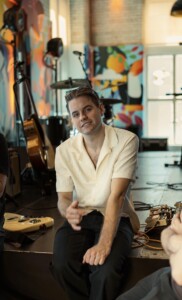

Richie Power (pictured above) is from the Liberties and still calls the area home, but it was only after spending time away, studying, travelling and meeting people from different backgrounds, that he began to see how differently it was viewed from the outside.
“I grew up in The Liberties, went to school there,” he said.
“I went to the Gaeltacht in Donegal, went to UCD, lived in London, so I was always mixing with different people from different walks of life.”
That exposure proved important.
Meeting people from outside Dublin’s inner city, he began to notice a gap between perception and reality.
“Their perception of my area didn’t match up to my reality and vice versa,” he said.
“If somebody hasn’t got experience with another group, it’s so easy to think of it in a way that you’ve maybe seen online, or you’ve seen a few headlines, so therefore that’s what the whole place is like.”
It was those kinds of assumptions that stayed with him.
While he had always appreciated where he was from, it was only when he saw the curiosity of others that the idea for the project began to take shape.
“Growing up, I’ve always known and always appreciated and loved this area,” he said. “I just love how special it is, and I always felt how special a place it was.”
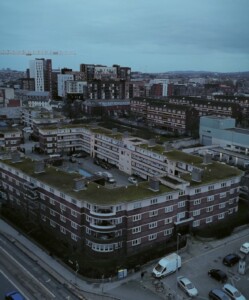

He recalled friends visiting from other parts of Ireland and the UK, drawn to the atmosphere of the Liberties.
“We’d always go to my local bars, we’d be walking through the flats, they’d be meeting the locals as we’re walking down the street.
“I remember one of my friends said it was like stepping onto the set of Coronation Street!
“I’ve seen how much getting to experience the working class community has meant to them.
“I always knew how special it was myself, but then seeing that people from all walks of life could relate or really enjoyed being in those situations, I thought this needs to be captured.
“So that’s where it came from originally, the thought of capturing this and giving exposure to working class voices.”
The initial idea was to create a podcast.
Instead, Power opted for short form video, working with videographer Dillon Ward to develop a distinctive visual style.
“I’ve only started this a few months ago,” he said.
“Originally, I thought of conducting the project through the form of a podcast, but eventually settled on short form video.
“I wanted to be able to offer payment for everyone who shared their stories and contributed to the series, to show how much I respected them and their contributions.
“I wanted to see if I could do this for six months, so I got on to Donore Credit Union and told them my plans.
“They agreed to support this for the first six months, and they’ve really helped out so I want to acknowledge them and thank them for all their support.
“For the Chats in the Flats format, I just feel like that style of just a slow drone zooming out really works.
“The format used is quite different to most modern day videos which are quite snappy and short.
“This is more longform.
“Also, I just want to say that this is not about spectacle or commentary.
“It’s about allowing people to speak for themselves, on their own terms.”
Episodes released so far feature a mix of voices connected to the area, including comedian Willa White, musician Ciaran Moran, Brian Brannigan of A Lazarus Soul, and Anita Reilly, known from Gogglebox.
The contributions range from spoken word to song to personal reflection, touching on themes such as fatherhood, addiction, grief and joy.
While the series is finding an audience online, the response within the community has been particularly meaningful.
“People feel a bit of a sense of pride seeing people that they also respect being showcased,” Power said.
“Seeing their voices being taken seriously and seeing how much that is resonating with so many different comments and messages from people that are relating to it.”
Those messages have come from far beyond Dublin. Some are from people who grew up in similar flats and have since moved away, while others are from communities in the UK and further afield who recognise the same patterns of life.
“I’ve a woman reply to one of the videos saying it was the best series she’d seen in years,” he said.
“She was in her sixties and from Cork.
“I want people from all backgrounds to see all the things that we all share in common.”
At a time when public discourse around working class areas often focuses on crime or deprivation, Power is careful in how he frames his work.
He does not deny the challenges that exist, but he believes they do not tell the full story.
“The aim of the media is to get clicks and attention and obviously the way to do that is through negative stories so sometimes they do tend to focus on the negative things that happen,” he said.
“I stay away from reading the media because it can be very negative. Look, don’t get me wrong, I do know sometimes negative things happen in working class areas.
“However, they don’t tell the positive stories, which far outweigh the negative ones, coming out of working class areas.
“Stories of how communities come together to help each other out.”
At the same time, he is keen to avoid positioning the project as a critique or a political statement.
“But look, I don’t want to make a political statement in my work, I just want to relate to the everyday person,” he said.
“And I don’t want to knock the media, that’s not what this is about.”
Instead, his focus is on creating space for voices that might otherwise go unheard, and in doing so, challenging assumptions indirectly.
“I understand why people have misconceptions, so hopefully by giving exposure people can get a better understanding.” he said.
“I feel like there’s enough negativity about areas like this, not just about The Liberties, but about working class communities in general. I wanted to break down that barrier.
“I wanted to show how much of a tight knit community it is and show people online that there’s more to it than the headlines we’re reading. The best people in the world come from these areas.
“Where I grew up, there was always a sense of community and everyone was always looking out for each other,” he said.
“We might not be related but if someone has an issue, the community comes together to help.
“People only see the bad things that happen, they don’t see what happens after when people go out of their way for each other.”
As the series continues, Power has plans to expand beyond online videos.
Live events are in the works for the summer, which will bring participants and audiences together in person.
A special community screening of ‘Chats in the Flats’, and a panel discussion with participants, takes place in Donore Credit Union tomorrow, Thursday May 7 at 6.00pm as a part of Culture Date With Dublin 8. This is a free event and no booking is required