


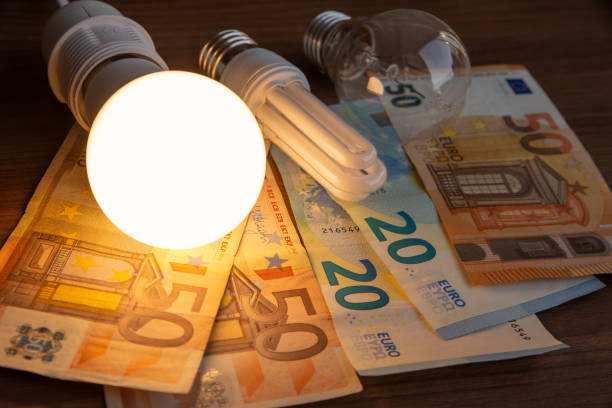
Dublin’s MEPs have called for action on high electricity prices.
Fianna Fáil MEP Barry Andrews and Sinn Féin MEP Lynn Boylan have said that the government need to take action to bring down costs for households, after Tánaiste Simon Harris warned that the ongoing war in Iran is the worst energy crisis since the 1970s.
The Tánaiste told reporters at 1916 commemorations that the ongoing energy crisis, triggered by the American and Israeli bombings of Iran, “is the worst the world has ever seen.”
The Fine Gael leader was quick to assure the public that the Irish economy was not heading for another 2008-style economic downturn, with the Irish Times quoting the Tánaiste as saying “the Irish economy is in a strong position, we have a country with full employment, our economy is growing, fiscal buffers are built up, and this is not an Irish-created solution.
Despite the Tánaiste’s assurances, however, Ireland’s MEPs are saying that Ireland can and should be doing more to alleviate the ongoing economic struggles faced by most households.
Andrews has said that the government should follow in the footsteps of Germany, Italy, Spain, Portugal and Austria in implementing a windfall tax on energy companies.
The Fianna Fáil MEP said that the Irish government implemented a similar measure in the wake of the Russian invasion of Ukraine in 2022.
Andrews said, “the sky-high energy prices are really impacting people badly, and any windfall gains by global energy companies must be redistributed to those who need it most.”
“We need a European solution to this crisis, that helps our small businesses, farmers and consumers. We need to use any windfall revenue to provide temporary relief, while also earmarking funding for investment in an energy system resilient to future shocks, through homegrown renewables and electrification.”
Andrews said that the oil crisis has exposed just how exposed Ireland is to major energy shocks.
“The Trump administration’s disastrous war on Iran has once again shown Europe’s vulnerability to imported fossil fuels and led to major increases in wholesale natural gas and oil prices,” Andrews stated.
“To avoid a repeat of this mess, we must double down on electrification through renewable energy, heat pump and electric vehicles. We need to rapidly scale-up our domestic grid and increase our interconnection. We have made huge advances already, but we now need to speed up electrification across the country.”


Fianna Fáil MEP Barry Andrews
Sinn Féin MEP Boylan said, “just like when Russia invaded Ukraine in 2022, the US and Israeli attack on Iran demonstrates that we need to radically rethink the way in which our energy market operates.”
“First and foremost, we must ensure that there are safeguards in our energy markets which prevent exploitation of these wars. Corporations should not be permitted to laugh off into the sunset with windfall profits off the back of violence and conflict.”
Boylan said that “windfall taxes should be used to protect ordinary workers and families to shield against this profiteering.”
The Sinn Féin MEP said, “the ongoing conflict in the Middle East also demonstrates the need to explore other measures that the EU could provide for in times of emergency.”
“For example, in the same way member states can now set the VAT rate on solar panels to 0%, states could be given the option to cut the VAT on household electricity to 0%. This would give member states additional powers to shield ordinary workers and families from the economic instability that geopolitical conflict causes.”
“People in Ireland are getting ripped off left, right and centre. They need the government to step up to the mark – both at a national and EU level – to rewire Ireland’s energy system so that prices come down for good,” she said.


Sinn Féin MEP Lynn Boylan
Three of the five countries that have implemented a windfall tax on energy companies (Germany, Spain, and Austria) have centre-left parties in coalition or leading the government, similar to how the Green Party were in coalition in Ireland in 2022 and was said to have been a major influence on the windfall tax being implemented in 2022.
Portugal and Italy’s governments are led by centre-right and far-right parties, yet they have introduced measures to combat the economic crisis that has spawned from the war in Iran and have said that a European-wide approach is needed to tackle the crisis.
The five finance ministers have written to European Commission boss Ursula Von Der Leyen, saying that a European-wide approach is needed to alleviate economic stress for its citizens.
In a letter dated April 3, the Ministers wrote “a European solution would act as a signal to the citizens of our member states and to the wider economy, demonstrating that we stand united and are able to take action.”
“It would also send a clear message that those who profit from the consequences of the war must do their part to ease the burden on the general public; working together and finding a European solution is the right approach,” they wrote.
“It would make it possible to finance temporary relief, especially for consumers, and curb rising inflation, without placing additional burdens on public budgets.”
The government’s relatively hands-off approach to handling the escalating energy crisis is a stark contrast to how the government handled the economic crisis triggered by the Russian invasion of Ukraine in 2022.
The war started in the final week of February 2022; by the end of the year, an extra €600 million was flowing into the Irish economy after a windfall tax was imposed on energy companies, with the money redistributed into the Irish economy by means of electricity credits for households and increased social welfare rates.
One June 2022 poll had Sinn Féin polling on 35% in the polls; by the time the government’s cost-of-living supports were being felt by Irish households, Sinn Féin started to decline in the polls, which led to Fianna Fáil and Fine Gael’s re-election in November 2024.
Last October’s Budget was seen as prudent, owing to Fine Gael’s control of the coffers under Paschal Donohoe; likewise, the October 2019 Budget was regarded as financially prudent at the time, with the “rainy day fund” being dipped into a few months later to pay for Covid-19-related social supports.
While Taoiseach Micheál Martin has played down reports that the government will be enacting Covid and Ukraine-style cost of living supports, some sources within government parties – and many within opposition ranks – believe that now is the time to dip into the “rainy day fund” as Ireland is now facing another global economic crisis.