


Warm tributes have been paid following the death of Olympic gold medallist Ronnie Delany, one of the most celebrated figures in Irish sporting history, who has died at the age of 91.
Delany’s name became forever etched in Irish sporting folklore on a December evening in 1956 when he stormed to victory in the 1,500 metres at the Olympic Games in Melbourne, delivering a performance that captivated a nation and inspired generations of athletes.
Born in Arklow in County Wicklow, Delany moved with his family to Sandymount in Dublin when he was six years old.
It was in the capital that his sporting journey truly began, first at the Christian Brothers’ O’Connell School on North Richmond Street and later at Catholic University School.
At CUS he came under the guidance of coach Jack Sweeney, a figure Delany would always credit as being central to his development as an athlete.
After winning Olympic gold in Australia, Delany famously sent Sweeney a telegram that read: “We did it Jack”.
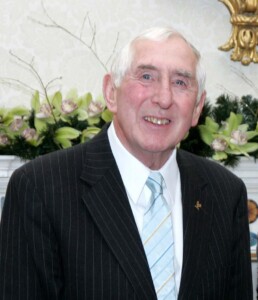

Reflecting years later on the role Sweeney played in his career, Delany said in 2008: “Other people would have seen my potential but he was the one who in effect helped me execute my potential”.
Delany’s running career soon took him across the Atlantic when he moved to the United States to study commerce and finance at Villanova University.
There he trained under renowned American coach Jumbo Elliott, continuing to develop into one of the world’s finest middle distance runners.
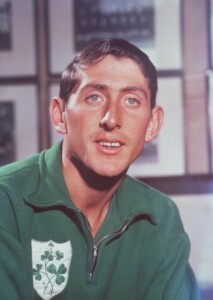

His first major international appearance came at the 1954 European Athletics Championships in Bern, where he reached the final of the 800 metres in what was his competition debut.
It was an early signal of the talent that would soon place him among the best athletes of his generation.
Two years later, in 1956, Delany joined the exclusive club of runners capable of completing the mile in under four minutes, becoming the seventh athlete in history to achieve the feat.
Despite that achievement, his place on the Irish team for the Olympic Games in Melbourne was far from guaranteed and he struggled to secure selection.
Once in Australia, however, Delany seized his opportunity.
He qualified for the final of the 1,500 metres where Australian runner John Landy was widely regarded as the favourite.
The race unfolded at a relentless pace, with Delany staying close to Landy as the runners approached the final lap.
Then came the moment that would define his career.
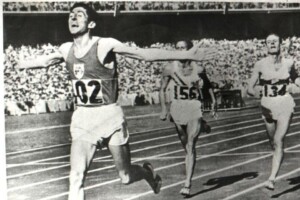

Launching a devastating finishing sprint, Delany surged past his rivals in the closing stages to take gold and set a new Olympic record.
The victory made him the first Irishman to win an Olympic gold medal in athletics since Bob Tisdall and Pat O’Callaghan achieved the feat in 1932.
News of his triumph reached Ireland in the early hours of the morning, with many people learning of the historic win over breakfast as radio reports spread across the country.
Delany’s gold medal would stand as Ireland’s last Olympic championship for 36 years until Michael Carruth claimed gold in boxing at the Barcelona Games in 1992.
Following his Olympic success, Delany continued to compete at the highest level.
In 1957 he won the British AAA Championships title in the 880 yards event, further cementing his status as one of the leading middle distance runners of his era.
The following year he claimed a bronze medal in the 1,500 metres at the 1958 European Athletics Championships.
Delany returned to Olympic competition at the 1960 Games in Rome, this time competing in the 800 metres.
He finished sixth in his quarter final heat.
Although his Olympic career was coming to an end, Delany’s running achievements continued to grow, particularly in North America where he enjoyed remarkable success on indoor tracks.
Over a sustained period he proved almost unbeatable indoors, winning four successive Amateur Athletic Union titles in the mile and compiling a remarkable 40 race winning streak.
During that time he broke the World Indoor Mile Record on three occasions.
His success also included three NCAA titles during his time in the United States and four Irish national titles.
In 1961 he added another international honour when he won gold at the World University Games in Sofia, Bulgaria.
Delany retired from competitive athletics the following year in 1962, bringing to a close a career that had placed him among Ireland’s greatest sporting figures.
After leaving elite competition, he built a successful career in business and marketing. He initially worked in the United States with Aer Lingus before returning to Ireland where he spent around two decades as assistant chief executive of B and I Line, later known as Irish Ferries, specialising in marketing.
In 1988 he established his own company focused on marketing and sports consultancy, remaining closely connected to the sporting world long after his competitive career had ended.
His contribution to Irish sport was formally recognised in 2006 when he was granted the Freedom of the City of Dublin.
A statue of Delany also stands in Delany Park in his birthplace of Arklow, a tribute he himself officially opened in 2019.
Following news of his passing, tributes poured in from across Ireland’s sporting and civic life.
Lord Mayor of Dublin Councillor Ray McAdam described Delany as one of the greatest figures in the history of Irish sport.
“I was deeply saddened to learn of the passing of Ronnie Delany, one of the greatest figures in the history of Irish sport and a cherished Freeman of the City of Dublin.
“Ronnie Delany gave immense pride to Dublin, to Ireland, and to generations of people who saw in his achievements the very best of our sporting spirit. His gold medal at the 1956 Olympic Games remains one of the defining moments in Irish athletics, but his legacy reaches far beyond medals or records. He carried himself with grace, humility and quiet dignity, and in doing so became a source of inspiration to countless people across our city and our country.
“When Dublin conferred the Freedom of the City on Ronnie Delany in 2006, it was a fitting recognition of a man whose name had already been written into the story of our capital. He was not only a sporting hero, but a gentleman whose life reflected dedication, excellence and a deep sense of honour.
“Ronnie’s passing will be felt far beyond the world of athletics. He was part of the fabric of Dublin’s civic and sporting life, and his contribution to our city will not be forgotten. He showed what could be achieved through talent, discipline and belief, and he leaves behind a legacy that will continue to inspire young athletes and proud Dubliners for many years to come.
“On behalf of the people of Dublin, I extend my sincere sympathies to Ronnie Delany’s family, friends and all who knew and loved him.
“Ar dheis Dé go raibh a anam.”
Olympic Federation of Ireland chief executive Peter Sherrard said: “Ronnie made an immense contribution to Irish sport and to the Olympic movement over many decades.
“Through his leadership of the Irish Olympians Association and his continued advocacy for athletes, he inspired generations and remained a proud ambassador for Team Ireland throughout his life.”
Former Lord Mayor of Dublin Councillor Nial Ring, a fellow past pupil of O’Connell School on North Richmond Street, also spoke of Delany’s enduring influence.
“Today, we have lost one of our brightest lights,” said Cllr Ring. “To the world, Ronnie Delany was the man who conquered Melbourne in 1956, bringing home Olympic Gold. But to those of us who walked the same corridors of O’Connell’s, he was the ultimate inspiration, a legend who showed us that with talent and humility, you could reach the very top of the world.”
Cllr Ring said he had met Delany on many occasions during his time as Lord Mayor.
“I had the privilege of meeting Ronnie many times during my year as Lord Mayor,” he said. “He wore his status as a Freeman of Dublin with immense pride.
“He didn’t just hold the title, he embodied the spirit of the city.
“Whenever we met, there was always that shared bond of being O’Connell School students.
“We would often swap stories about our school days, and he always expressed his interest in the next generation of students coming out of O’Connell’s.”
He added that Delany’s legacy is also reflected in the Ronnie Delany Sports Pitch at O’Connell’s CBS.
“Ronnie was a gentleman in the truest sense of the word. He was approachable, kind, and fiercely proud of his roots.
“On behalf of O’Connell’s CBS, I want to extend my deepest sympathies to his wife Joan and his family.
“He has finished his final race, but his legacy will run forever in the streets of Dublin.”