


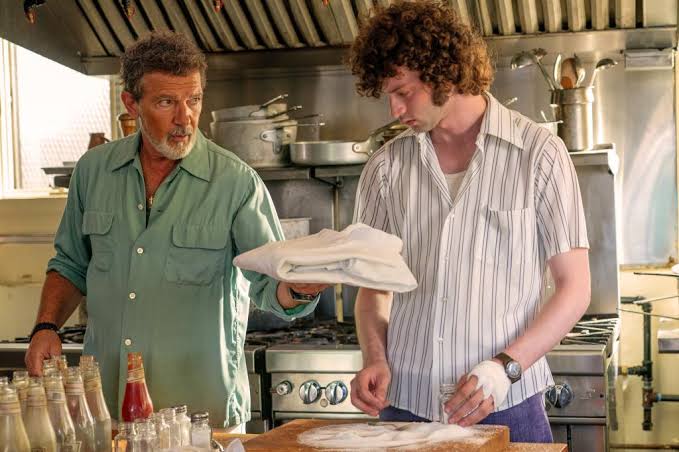
Anthony Bourdain has reached a stage in the culture where audiences feel like they know the man without having ever met him.
His various television series saw him visit locales the world over; the most memorable episode of Parts Unknown saw the former bad-boy chef share a beer with then-President Barack Obama on the streets of Hanoi, while an episode of The Layover saw him wax lyrical about his love of Irish literature and enjoying a drink at Gravediggers.
Naturally, any movie that depicts him in fictionalised form is going to be met with friction.
For people who never liked Bourdain, a film like Tony is just confirming what they already knew: that he was a pompous, overly confident narcissist with a bad case of Dunning-Kruger.
For superfans of Bourdain, a film like Tony will be criticised for not depicting their hero as the profane, punk rock poet who told it as it is, and made the world a smaller place by expanding their knowledge of food.
Tony manages to please both camps.
Dominic Sessa, of The Holdovers, is given the unenviable task of playing an early-20s Bourdain yet still putting his own spin on the cultural figure audiences come to know.
Sessa was a total unknown before The Holdovers, and in our review of that film in early 2024, we remarked how it felt like he was plucked out of a Hal Ashby movie from the 1970s.
The same thing has happened again; you fully believe you are watching Bourdain during a formative summer in the mid-1970s.
Tony is only his fifth film, but Sessa demonstrates a maturity and a sensibility beyond his years; if Hollywood ever gets sick of Chalamet, his replacement is tailor-made.
The film opens with a quote from Kitchen Confidential where Bourdain explains, “I was a spoiled, miserable, narcissistic, self-destructive, and thoughtless young lout, badly in need of a good ass-kicking.”
Sessa captures that attitude perfectly; if there is a reason to see this film (which we are recommending), it’s seeing a younger actor sink his teeth into a messy, complicated character from the past.
There are hundreds of hours of Bourdain footage out there; Sessa manages to make him feel fresh again.
The Holdovers was a star-making performance for Sessa in the sense that we didn’t know who he was before that movie came out; this movie proves that performance wasn’t a fluke and he has the goods.
The cast is the strongest part of Tony; Antonio Banderas plays a composite of the various characters Bourdain met during his early years working in kitchens.
Banderas throws cold water on the young Bourdain every morning, doesn’t tolerate taking God’s name in vain in his kitchen and doesn’t like people being late; he ends up being a surrogate father figure for the young man.
Banderas’ soulfulness is the perfect counter-balance to the languid, moody Sessa.
The film is at its best when it captures the pirate ship mentality of the kitchen; anyone who has ever worked in a hospitality job will instantly recognise the waters the film is playing in (and to be fair, the book did that as well).

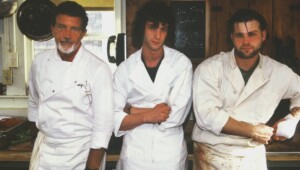
Antonio Banderas, Dominic Sessa and Leo Woodall in Tony
Leo Woodall emerges from the film as the film’s stealth MVP; he becomes a bigger brother type to the young Bourdain, and is the darker ID to Bourdain’s ego.
Woodall is best known to audiences for his turn in the second season of The White Lotus and the most recent Bridget Jones film, and his performance here reveals there is darkness underneath his buccaneering swagger.
There are scenes where the actors are bouncing off each other and are clearly making it up on the fly; that would be the influence of the director Matt Johnson.
Summer 2026 could be dubbed the unofficial Summer Of Matt Johnson; Nirvanna The Band The Show The Movie picked up a healthy cult fanbase across the world, with screenings of the film picking up a cult audience at the Lighthouse Cinema, while a recent BBC article noted the film has become a cult hit in South Korea.
Johnson is right on the cusp of being a huge name among fans of cult cinema, and being plugged into the Hollywood system.
All of Johnson’s films to date have a loose, anarchic streak to them, and Tony has elements of that, but this feels like Johnson proving he can make a serious, grown-up film.
Ironically, when the film feels like a classic Matt Johnson film – manic energy, actors clearly improvising, this sense that anything could happen – it feels like a cut above the rest.
The film gets dragged down when it has to be a normal, conventional Hollywood film about a younger Anthony Bourdain.
The film is an adaptation of the first two chapters of Kitchen Confidential, and it isn’t a straight 1:1 adaptation; there are elements that are straight from the book (such as a chef in the kitchen sleeping with a bride on her wedding night) and other parts that are invented wholesale.
There are two sets of writers on the film; the initial script, as written, is a conventional biopic, and the film is dragged down when it tries to behave like a normal biopic.
If you pay attention during the opening credits, you will notice that the film is written by Todd Bartels and Lou Howe, credited as one writing team, while Johnson and his frequent collaborator Matthew Miller are credited as the other writing team.
Bourdain was a fan of punk rock, and Johnson’s projects have that sense of punk unpredictability to them; the film is a perfect marriage of the two when Johnson is allowed to cut loose, and we estimate that about 60% of the film is done in the Johnson style we have come to love.
The other 40% is, we are sad to report, full of the classic cliches such as the biopic girlfriend who tells the historic figure they are never going to make it, the disapproving mother, and the cutesy name-dropping.
The most innovative thing that Tony has to say about Bourdain himself is that the man was his own best publicist, and by extension, says that all writers are like that too.
This will not come as a surprise to readers, but journalists and writers love movies where we are made to look like cool, exciting people.
The best films about journalism, like Spotlight and All The President’s Men, depict journalists as heroes who save the day, but the best films about writing, like Almost Famous or Sunset Boulevard, depict writers as people who are gifted at spinning the truth.
The best scene in Tony has our hero telling the girl he is trying to impress about his summer to date; he spins a tale of him being a writer who is wanderlesly aiming, projecting an image of being an aloof, cool drifter, but the film crosscuts with his time in the kitchen.
In that moment, Tony rises above the rest and feels true to the spirit of Bourdain; the man himself always sounded like he believed what he was saying, and the audience largely went along with him for the ride.
Tony doesn’t tell us anything we already didn’t know about the man himself, but by the same token, it didn’t need to tell us anything new.
Instead, the film homes in on a universal truth: if you want to be a good writer, you need to have an eye for detail for the smaller stuff.
If you are 20 years old, it is likely this film will be the most profound, transformative thing you’ve ever seen.
For Matt Johnson fans, our favourite Canadian trickster has shown he can still be himself while still operating within the confines of a more traditional structure.
For people who hated and loved Bourdain in equal measure, Tony is a cinematic Rorschach test.
And for people who want to end the summer outings to the movies with something a bit different and unusual? Tony is a dish that will reward adventurous diners.