


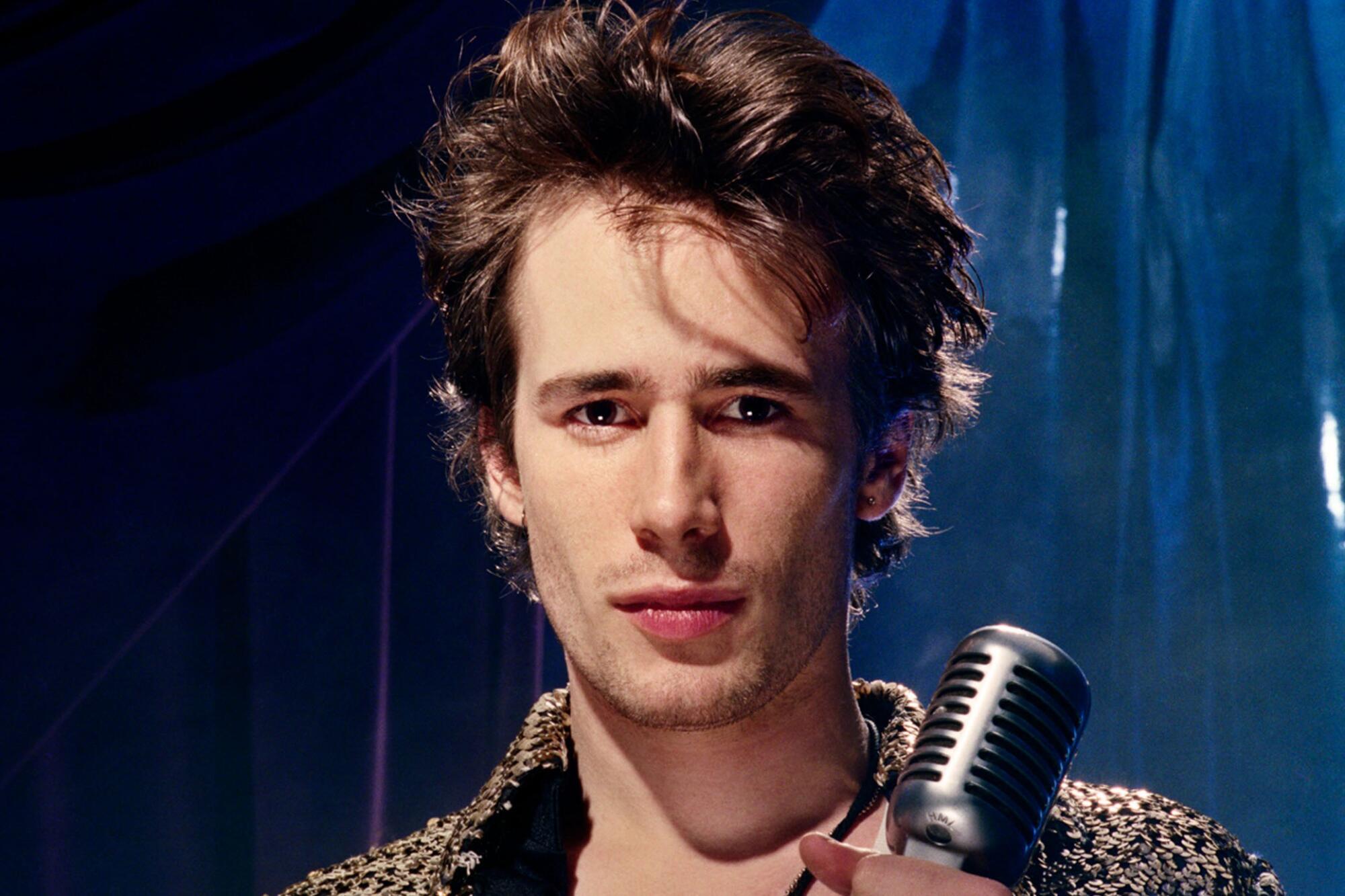
Every great rock star worth their salt has received the documentary treatment; now it’s the turn of the late Jeff Buckley to go under the microscope.
A movie about the ’90s rock icon has been long in the works, with debates about whether it should be a narrative film or a documentary.
The Buckley family believed that a documentary was the best way for their son’s story to be told, and director Amy Berg has the unenviable task of combing through hundreds of hours of phone calls, rare photos, tour footage and attempting to stitch together a traditional A to B story about a true one-off.
Telling the story of Jeff Buckley lends itself to so many different elements that could make for its own movie – his relationship with his father Tim, how he achieved fame post-death, the virtue of him being bigger in Europe than America, the unreleased second album – but the film’s biggest mistake is spreading itself too thin.
Buckley’s level of fame and influence in Europe would have been an interesting movie in and of itself; here, it gets just a minute of screentime and is glossed over.
Considering Buckley’s Irish roots, and how Irish and British fans were among the first to make his cover of Hallelujah a chart hit in 2008, there was a real missed opportunity to dig into why Buckley was someone who was outcharted by Hootie And The Blowfish in the States but became a posthumous chart star on this side of the Atlantic.
To use a music metaphor, It’s Never Over, Jeff Buckley is like static on a car radio when you’re flicking between stations; you get tiny snippets of something you want to investigate further, but the signal drops out.
The documentary has all the Jeff Buckley stories you heard a million times before, you hear U2 and Led Zeppelin members sing his praises, you hear how Radiohead were inspired to write Fake Plastic Trees after seeing him perform, but the strength of the film is simply watching the man himself in action.
A great documentary simply lets the subject speak for themselves, and Berg just lets the camera roll; if you simply want to see Buckley in a concert setting, there is more than enough footage to keep fans happy.
Buckley’s mother, ex-partner, girlfriend, band members, producers and contemporaries are among the talking heads in the documentary, and they offer insight into how Buckley ticked.
In a rare instance of a critic wanting a film to be more like television (sworn rivals, much like Celtic and Rangers), this documentary would have been better suited to a television format rather than a film.
The Netflix model of six hour-long episodes would have been better suited to a subject matter like this; what we get here only scratches the surface of why Buckley was such a sensation at the time, and indeed, in death.
It is somewhat fitting that an artist like Buckley, who left us with so much unfulfilled potential, gets a documentary that leaves the audience wanting more.
In the case of Buckley’s music, you are left with a sense of what could have been and that feeling is tinged in sadness; you are left with a similar feeling with the movie, and it is tinged in frustration.
Berg has form in making television (her previous works include a five-part series about Adnan Syed), and as the film progresses, you are left wishing it had more room to breathe.
The glimpses into Buckley’s inner life and workings are where the documentary brushes up against its constraints as a film; the final stretch of the film, which focuses on Buckley’s final days in Memphis, is when the film buckles under the weight.
Buckley’s final days have haunted fans for years; the film’s access to his voicemails, illustrations, and phone calls paints a nearly voyeuristic picture, an approach that is sure to divide opinion.
Voicemails to his mother and partner reveal exactly the kind of stress that Buckley was under to deliver a second album after Grace (which we now know as a landmark album of ‘90s rock) underperformed commercially, and it almost feels like you shouldn’t be hearing some of the calls.
The typical viewer is heading into this film knowing how the story ends, but it still doesn’t make it any less sad; that is the power of Berg’s directing style, where you feel like you’ve gotten to know Buckley and how his mind works, even just a little bit.
The very best music documentaries offer an insight into the creative process, and fans of Buckley will surely appreciate the chance to peek behind the curtain and have an intimate look at the creative process.
Stylistically, illustrations of lyrics, raw footage, and animation help make the film come to life.
To the credit of the film, there is real money put behind it; Brad Pitt is listed as an executive producer on the film, and his weight behind the film surely played a role in helping the film look and sound like a real deal documentary instead of a YouTube fan video.
2015 saw the release of Kurt Cobain: Montage Of Heck, and that film drew praise (and criticism) for being nearly too intimate a look into the psyche of a fellow ’90s rock icon.
Montage Of Heck was deeply unsettling, and it almost felt like you were a fly on the wall of a creative genius who clearly needed help; over a decade later, it feels like revisiting uncomfortable territory again.
Montage Of Heck made viewer the ruminate in Cobain’s psyche with ruthless intimacy, Berg flirts with a similar closeness with her subject here, but pulls back, leaving the story disjointed and unresolved.
Berg tries to have it both ways by framing it as an open-ended mystery that doesn’t have a clear throughline; it feels messy in a way that doesn’t gel with the rest of the film.
Berg’s decision to invite speculation about the death of Buckley is an unwelcome blemish on the film; for a film that only skims over other parts of his life, the almost forensic focus on his final days veers a bit too close to exploitative.
A documentary shouldn’t gloss over the darker parts of someone’s life, it just becomes a hagiography otherwise, and the sadness is an inherent part of the Buckley story, but it’s handled rather poorly here.
Despite the fairly major misgivings, the documentary is still worth a watch; it’s not every day you get the chance to hear and see Jeff Buckley on a massive cinema screen with good sound.
The documentary offers a rare thrill in watching Jeff Buckley inhabit the stage, even if the audience only gives us glimpses of the man behind the music.
If you’ve read every book about him or just know his songs from Heated Rivalry fan edits on TikTok, there is something for all kinds of Buckley fans, old and new alike.