


Alongside The Simpsons and The Wizard Of Oz, the works of William Shakespeare are cultural shorthand that transcends generations.
Everyone has to study Shakespeare in school (in this critic’s case, The Merchant Of Venice and Othello), and has heard or seen references to Shakespeare’s work in countless films, books and music.
The 1990s saw a mini-Shakespeare boom in cinema with the likes of 10 Things I Hate About You being stealth adaptations of Shakespeare’s work, Shakespeare In Love winning Best Picture and of course, the Kenneth Branagh wave of adaptations.
Shakespeare’s influence still looms large over the culture, but novelist Maggie O’Farrell asked in her 2020 novel Hamnet, “what about the woman in Shakespeare’s life?”
Hamnet focuses on how Shakespeare used the death of his son to write Hamlet, and it is as emotionally devastating as it sounds.
So much of the novel’s power was focused on how Shakespeare’s wife, Agnes, internalised her grief and the loss of their son, and when the novel made the transition to the big screen, it required an actress with a masterful control of tone and non-verbal acting to bring the character to life.
That actress, of course, is Jessie Buckley, who is probably going to win the Oscar for this.
We won’t even pretend to be subtle or dance around it, there’s a very strong chance that Buckley wins the Academy Award for Best Actress in March, and it’ll be hard to find someone who will tell you she doesn’t deserve to win.
In our final review of 2025, we talked about how the Norwegian actress Renate Reinsve was the heir to Ingrid Bergman and how her performance in Sentimental Value was extraordinary.
Like the final game of the group stages in the 1994 World Cup, the battle for Best Actress will be a showdown between Ireland and Norway.
Two of the best performances of the year draw strength from what isn’t said, and how the actresses say it all without actually saying a word.
Buckley’s performance in Hamnet is the high point in a career already strewn with great performances.
In fact, Buckley’s performance is so good that it manages to paper over the cracks.
Make no mistake, Hamnet is an incredibly effective and moving portrayal of grief and opens up a wider discussion about what role the arts have in our society, but it takes the long road to get there.
Hamnet sees O’Farrell adapt her own novel alongside Nomadland director Chloe Zhao, and it’s a faithful adaptation of the novel – for better and in our view, for worse.
The film version of Hamnet is strikingly similar to reading the novel; you read the first half and go, “what’s all the fuss about,” then the second half is one of the most devastating, heartwrenching things you’ve ever read.
The first half of Hamnet, as a film, is a bit of slog in all truth but it does a lot of heavy lifting to make the ending land as hard as it does.
You can tell what parts of the scripts are O’Farrell’s and what parts belong to Zhao, and what Zhao brings to the table is what elevates the film from a straightforward adaptation to something masterful.
The strongest parts of the novel are how O’Farrell depicts the interiority of Anges’ thoughts, which isn’t exactly something you can easily depict in film.
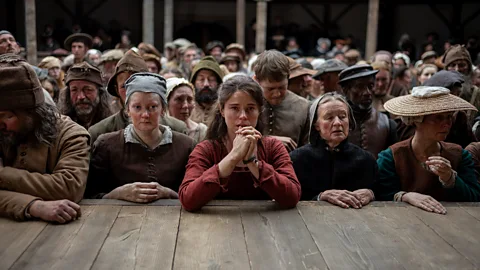
There are workarounds, like voice-over, using insert shots, but Zhao opts to have the film rest on the look on Jessie Buckley’s face and her body language.
It’s a risky and bold move from Zhao, and in the hands of a lesser director/actor team, it could be catastrophic, but the Kerry woman makes it look effortless.
The other big attraction is one Paul Mescal, who is also certain of an Oscar nomination for his performance as William Shakespeare.
Mescal’s attempt at being a Hollywood action man didn’t quite pan out in Gladiator 2 (that film gave a distinct impression that he was a boy playing dress up, in contrast to Russell Crowe’s mans man performance), and he is much better suited to a film and role of this scale.
Mescal is tasked with selling the film’s themes of loss and how we express ourselves through the arts, and the Kildare man does a fantastic job of doing just that.
There has been some hand-wringing about whether Mescal is lead or supporting (for award season purposes, he is being run in supporting), but the film makes it pretty clear that Buckley is the lead and Mescal is the main supporting character.
Mescal’s chemistry with Buckley is effortless, and while that might seem like a trite observation to make, that hasn’t always been the way with Mescal; in 2021’s The Lost Daughter (which, coincidentally, was Buckley’s first Oscar nomination), there was a sense that Mescal was out of his depth alongside a giant like Olivia Colman.
Five years later, and Mescal is much more comfortable being the leading man and using his brand of closed-off male interiority to the film’s advantage.
In that regard, Hamnet is a great example of why a book-to-screen adaptation can improve on the source material, it brings the characters to life, but in other ways, it carries the original sins of the novel.
The initial courtship between William Shakespeare and Agnes takes up the majority of the first act, as does the birth of their children, but it doesn’t give us nearly enough of an insight into their relationship once Shakespeare leaves for London.
Something feels missing from Hamnet to tie it all together, and we would have tolerated an extra 20 minutes on the run time if it meant the relationships between the characters were better fleshed out.
For large chunks of the film, an adaptation of Hamnet feels like it would be more comfortable on the stage, in all honesty, and it somewhat struggles to fit the confines of a film with a three-act structure.
Zhao’s eye for impressionism does help in this regard, as does the work of Polish cinematographer Lukasz Zal (known for his work with Pawel Pawlikowski and Jonathan Glazer), but not even strong performances and gorgeous photography can make up for an uneven script.
To deploy a football metaphor, Hamnet is 2-1 down in the 75th minute of the game, Buckley is keeping the team afloat with a spirited and heroic performance, and Mescal comes off the bench to help Hamnet win 3-2.
Despite the misgivings with the script, Hamnet is well worth making the trip to the cinema for.
In recent reviews, we have mentioned whether people would be better off waiting for a film to hit streaming, as visiting the cinema isn’t the cheapest form of entertainment.
With that in mind, we can say that Hamnet is worth a trip to your local cinema or arthouse theatre of your choice.
Some films are best seen on a big screen with a crowd, and while we wouldn’t necessarily recommend a bag of popcorn for this one, there is an added power and oomph to the movie when it’s on a big screen that Netflix can’t quite replicate.